


You have trained relentlessly. You know your potential. And yet, right before you step into the spotlight, fear captures your mind. Whether you’re about to compete, preparing for try-outs, being interviewed, or speaking onstage for your sport, that surge of fear can rule your performance if you don’t learn how to face it.
As I mention in my book Fear To Fearce, a small amount of stress leading up to a performance is healthy and can indeed help us improve performance. This type of pressure feels like butterflies in your belly. Performance anxiety, on the other hand, feels less like butterflies and more like tiny vampire bats with machetes.
Performance anxiety isn’t just ‘nerves.’ It’s an intense, full mind-body response driven by the fear of negative evaluation when we step into high-stakes performance domains. For many peak performers, output becomes fused with identity, making our performance abilities a proxy for who we are. This astronomically jacks up the stakes of making a mistake, as failure would not only represent a strike to our success record, but to our self-worth. For athletes, coaches, and performers alike, these perceived stakes can lead to conscious and unconscious avoidance behaviours and self-sabotage. In turn, these patterns prevent risk-taking, consistency, and the tolerance for the discomfort required to build mental resilience and achieve peak performance.
This article isn’t about sharpening your performance skills; if you show up to practice day after day, you likely already have that covered. Instead, this is about forging the capacity to endure the pressure and fear that come with striving for performance excellence. The first step is understanding that avoidance reinforces fear, while exposure rewires it.
You have to respect that every athlete that’s
(at your level of excellence) has done physically
what it takes to be there… because they’re
standing next to you.
REPS: Repeated Exposure to Perceived Stress
Just like physical training, mental resilience is built through the repetition of facing the thing we want to avoid. The REPS model trains us to flex the courage muscle so we can maintain momentum toward high-performance goals.
R (Repeated)
One exposure isn’t enough to rid performance anxiety. Confidence is strengthened by consistent repetition of performing under pressure. That means having the courage to show up again and again, even when the fear feels unbearable: Taking another shot. Stepping back on stage. Staring down critics. Risking failure.
Repetition makes the confrontation of fear familiar, and familiarity neutralizes fear.
E (Exposure)
Many people try to manage performance anxiety with breathing exercises, visualization, or even distraction. While these tools can help in the moment, literature consistently shows that outright exposing ourselves to the feared stimulus is the most critical element in reducing anxiety long-term.
- Not all at once, but progressively you can start to:
- Practice in front of one person you trust before a full room.
- Simulate performance conditions in training.
- Record yourself and watch it back.
- Show up. One session at a time. One step at a time. One breath at a time.
- The goal is desensitization, not perfection.
P (Perceived)
Here is the key: Just because you perceive a threat doesn’t mean you’re in actual danger.
*I’ll caveat this by saying that in some performance domains, such as extreme sports like race car driving, the possibility of injury and even death cannot be ignored. In these cases, fear is a protector of both livelihood and lives. The nuance is that REPS focuses primarily on performance-related fear, not legitimate safety concerns. Athletes in high-risk sports often require an additional layer of mental resilience to cope with real danger while striving for peak mental performance.
Your nervous system doesn’t distinguish well between a threat to your life and the threat of negative social evaluation. Thus, the concept of missing a goal, forgetting choreography, or being judged can feel dangerous. REPS works by helping your brain contextualize fear in athletic performance and update it to False Evidence Appear Real.
S (Stress)
Not all stress is bad. In fact, optimal stress (not too much, not too little) can enhance performance by sharpening focus and preparing the body for action. The goal isn’t to eliminate stress, but to hone it, using that increased energy as a cue to step forward, not fall back.
Each time you step toward a perceived threat and come out the other side, you teach your nervo us system a new story:
“I have the courage to bear this fear and still perform anyway. I can turn fear into fuel.”
Peak performers don’t run from fear or wait for it to disappear. They put in the REPS and build the courage to perform with it.
For more on turning fear into fuel and achieving Fearce performance in your personal and professional life, check out my Fear To Fearce Book on Amazon.
Photography: Jeremie Dupont
You may also like: Mindset Mastery
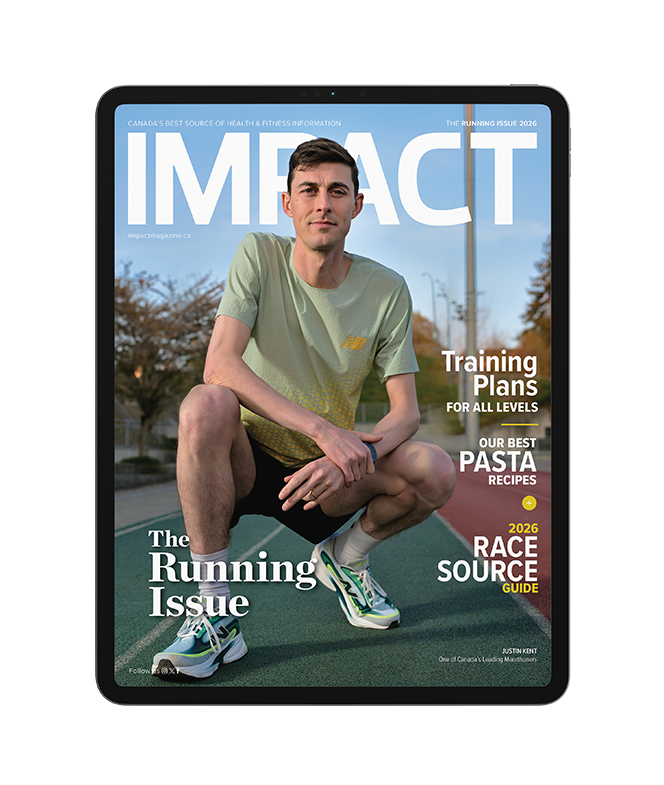
Read This Story in Our 2026 Running Issue
IMPACT Magazine Running Issue 2026 features a rising marathoner quickly climbing the ranks. Discover and travel to your next favourite marathon, prepare for your next big event with expert training plans, and dive into strength workouts and runner-focused articles. Plus, enjoy delicious pasta recipes and so much more.
This just scratches the surface of what you’ll find in this issue, so dive into the DIGITAL EDITION and be empowered for a fantastic 2026!