
Spring running heralds the arrival of longer, warmer days. However, many runners, after a winter of reduced activity, often mistakenly resume their fall training volume, leading to a surge in overuse injuries, including IT band syndrome. When the IT band tightens, it can rub against the outside of the knee, causing friction and significant discomfort that can halt your running. Although the IT band itself isn’t a muscle and can’t be directly strengthened, maintaining its pliability, strengthening surrounding muscles, and employing good running technique are crucial for injury prevention.
So, how can we proactively prevent IT band syndrome? Here are four exercises designed to not only minimize the risk of IT band issues but also strengthen your hip and knee stabilizers, maintain IT band pliability, and refine your foot strike, ultimately making you a stronger, faster, and more resilient runner.
These four movements serve a dual purpose. They are a great training tool on their own for a strength or prehab session and are also great to add to your run warm-up. Do these on a track, sidewalk, closed road or any open space at a gym.
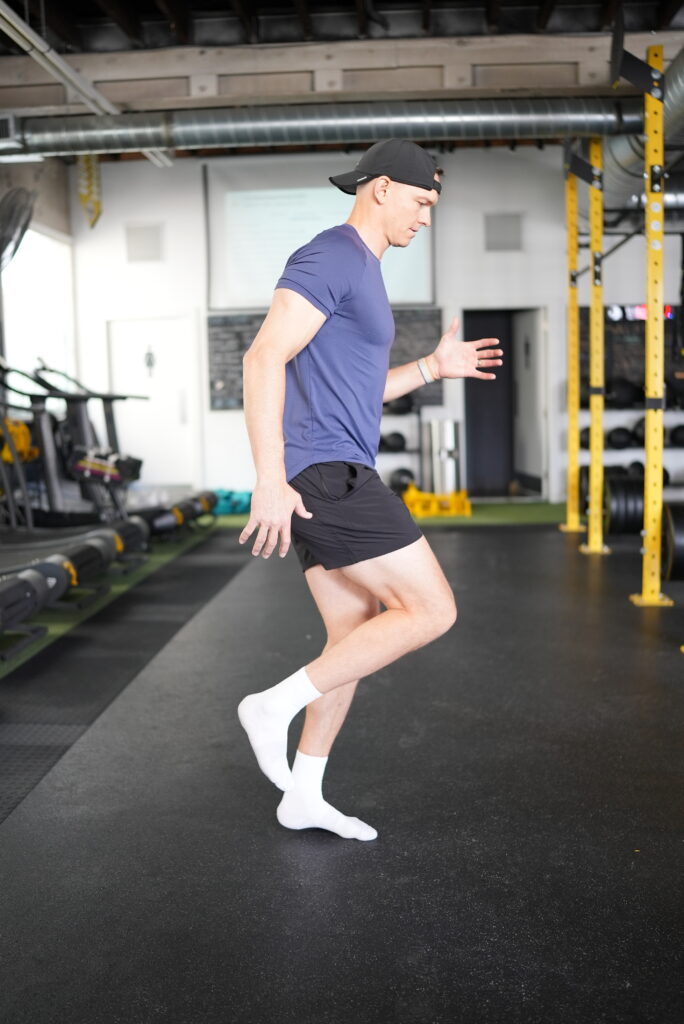
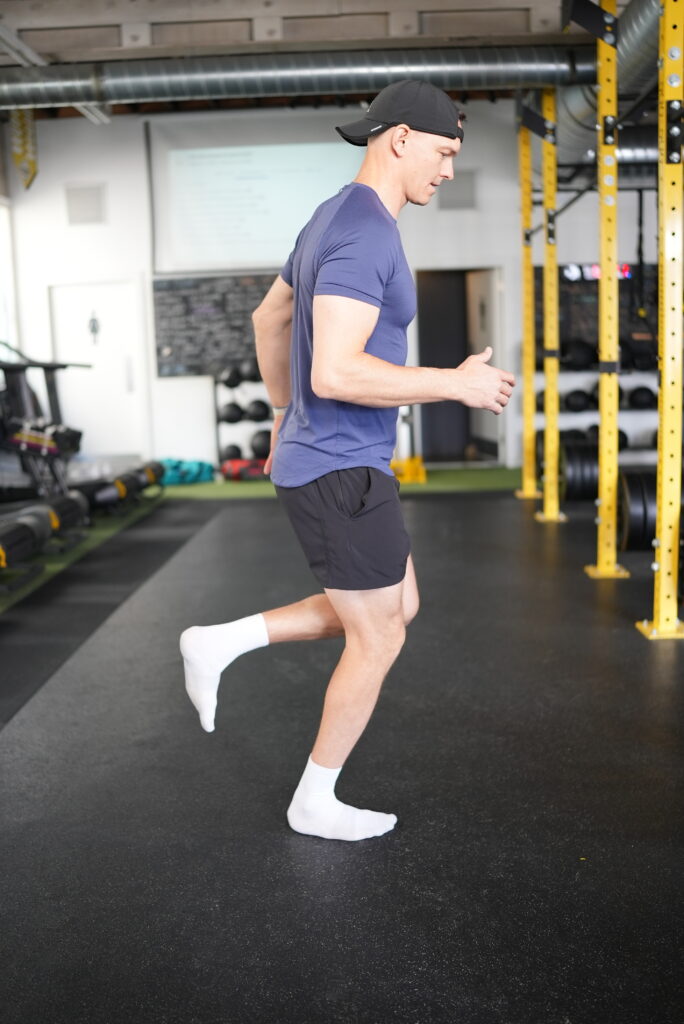
SKIPPING
Find a rhythm and perform for 100 metres (400 metres or 1 lap around the track for experienced runners)
Skipping is foundational to running. This warm-up movement teaches the body to relax and contract while gradually increasing impact. Try to land flat-footed, the ball of your foot striking milliseconds before the heel and aim to not make any noise. Allow the arms to swing loosely and relax your neck and jaw. Proper run mechanics are paramount to keeping your IT band happy.
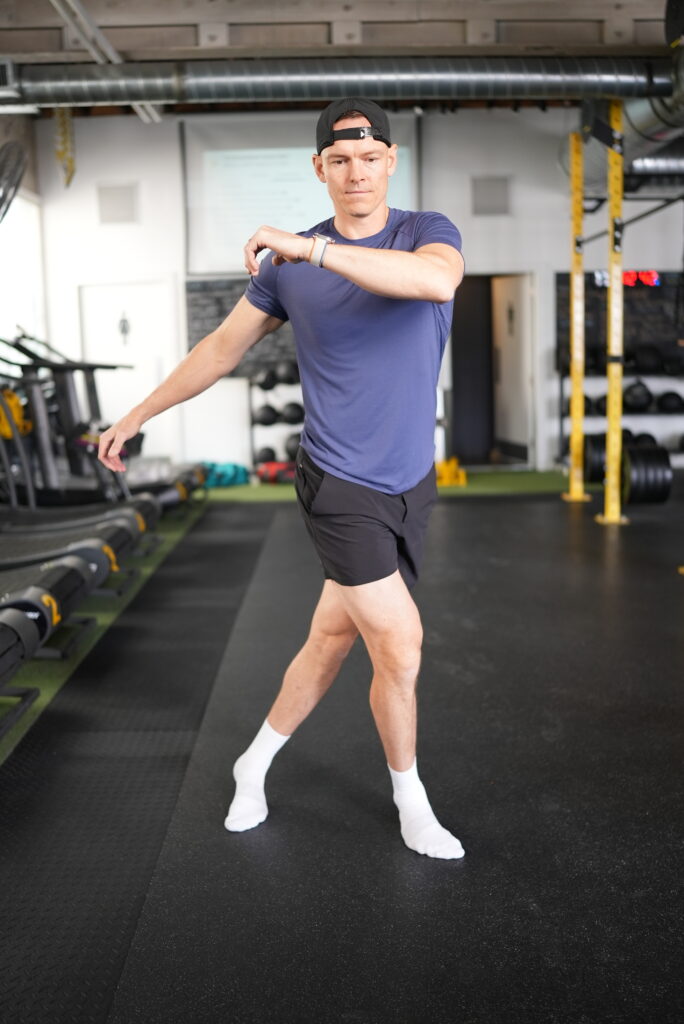
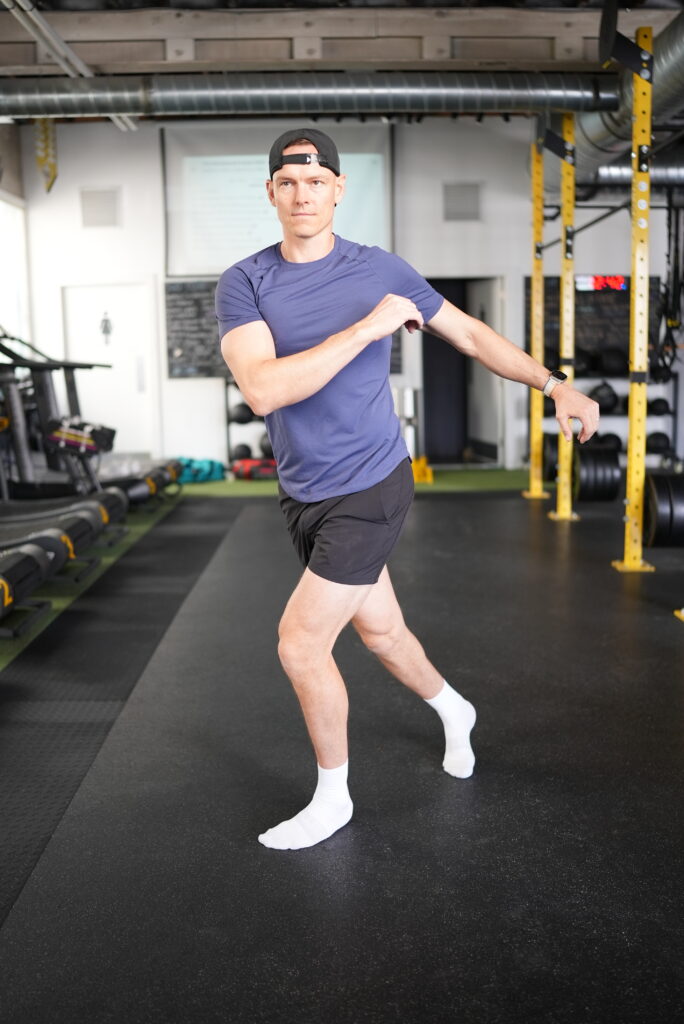
CARIOCA
This exercise is about allowing your hips and spine to rotate more than they typically will while running. Unlocking the pelvis and spine allow for the natural movement of these segments to avoid restricting the IT band from gliding. Landing flat-footed again, cross over your front leg while keeping your belly button pointing forwards and then come back to neutral and cross over the same foot behind you on the next step, then back to neutral.
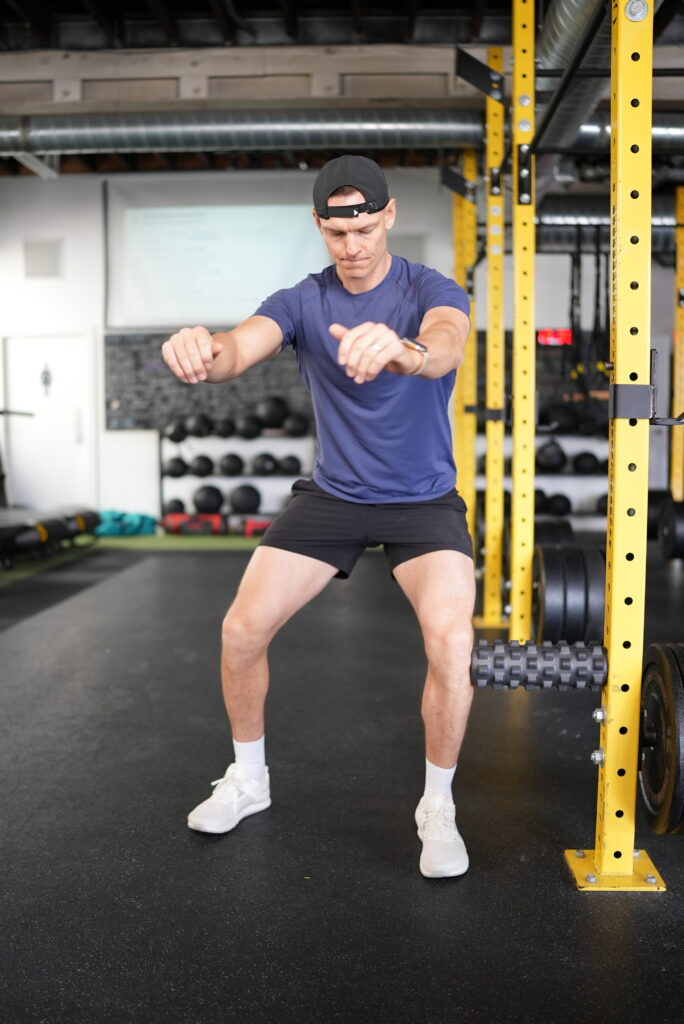

ISOMETRIC LATERAL KNEE PRESS
Hold for 10 seconds, relax and repeat 4 sets per side Activating the gluteus medius and lateral portion of the hips helps unlock the pelvis, “activate” musculature on the side of the hip and prepare the nervous system for running. This will allow the correct muscles to fire while allowing the IT band to glide. I’m using a foam roller here but so long as your knee is pushing against an immovable object, it can be in direct contact. Get into a semi-squat position, and create a tripod with the heel, big and little toe firmly planted into the ground.
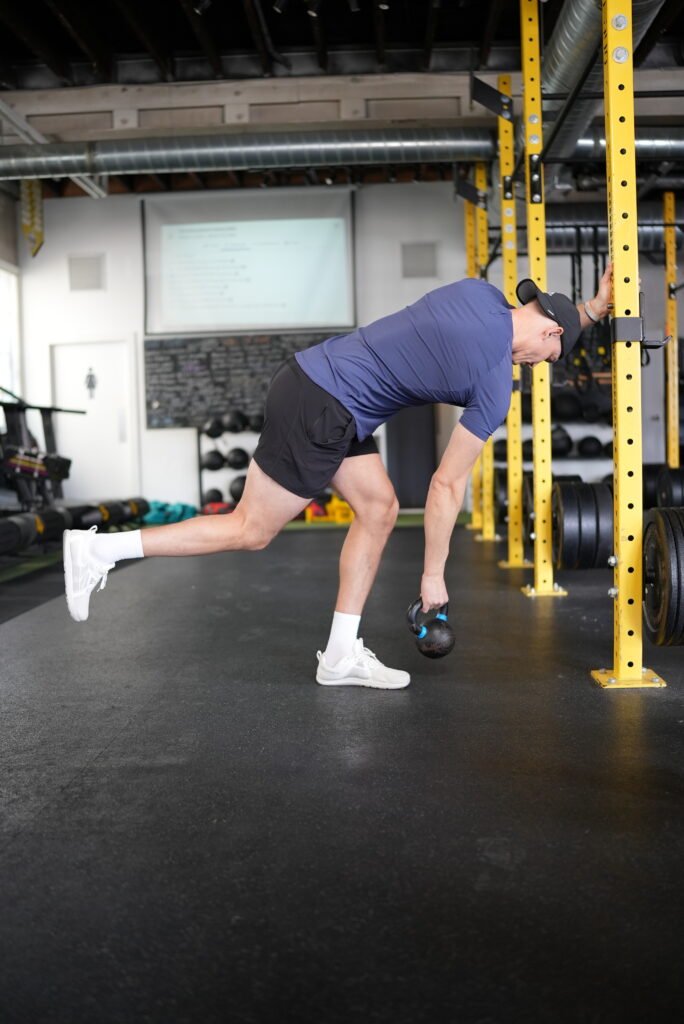
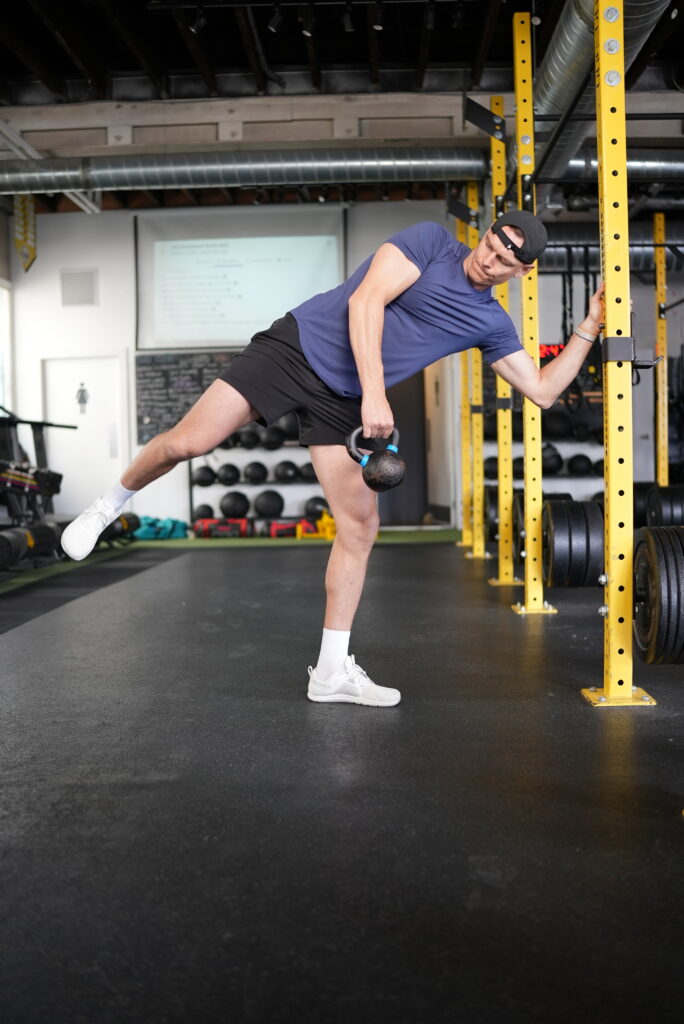
LOADED HIP AIRPLANE
12-15 reps per side at a controlled pace Now we want to load up the spine and pelvis while the hip is rotating to strengthen and improve mobility. Holding any weighted object, start light, 10 lbs until you get the feel for this. It’s both a stretch and strengthening exercise. First load up the hip by fully rotating in a hinge with your hand towards the ground. Then rotate from the grounded hip to stack the top hip over it. It’s important you feel the stretch on the side of your hips (gluteus medius) initially to fully load the movement, then fully stack your hips to activate the muscles. Maintain a flat spine throughout.
A Note on Bare Feet
To self-teach proper walk and run biomechanics, I’m a big believer in barefoot work. If you can, perform these movements in bare feet, socks or at the very least, a zero-drop, zero-cushion shoe. This trains the musculature of the foot how to absorb force at impact and provides direct feedback to the rest of your body on how to react naturally. Don’t try running in barefoot shoes before walking and doing these drills, then build up in 400-metre-jog + 400-metre-walk intervals. It’s ok to run races and volume work with cushioned shoes but don’t neglect strengthening and mechanics exercises!
Photography by Jack Mason
You may also like: Workouts
Read This Story in Our 2025 Running Issue
IMPACT Magazine Running Issue 2025 featuring some incredible Canadian women ultrarunners who are on the rise on the world trail stage. Run your way around the world to earn your six star Abbott World Marathon Majors commemorative medal. Train for 10 km right up to a marathon – plus a 50 km trail run and 70.3 program. Strength workouts for runners, carb load with these pasta recipes and so much more.