

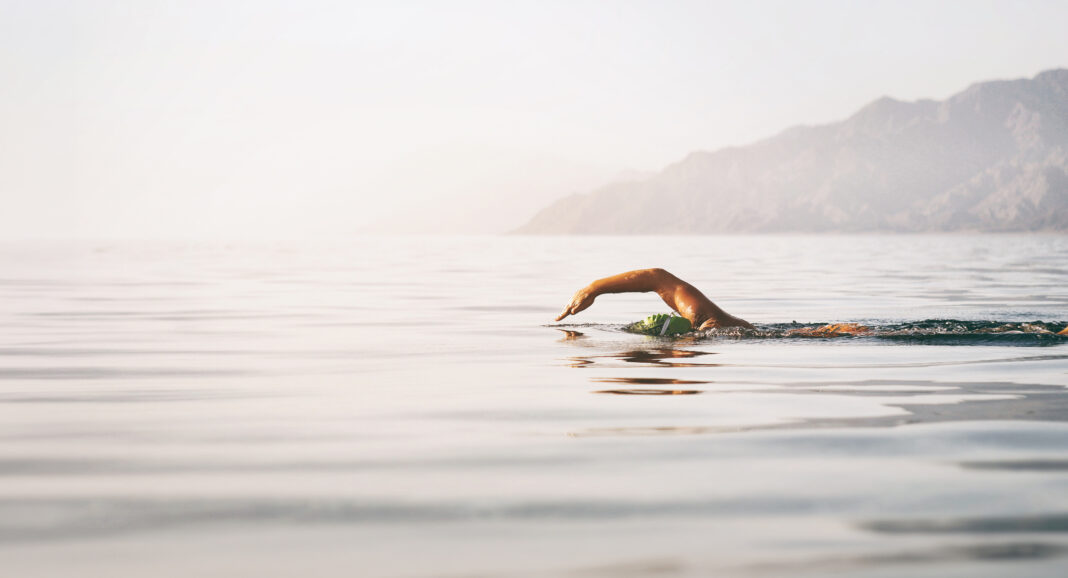
Open water swimming is one of summer’s best arguments for getting outside: simple, demanding, refreshing, and just wild and unpredictable enough to make a hot day feel transformed.
It can also feel like a brief escape, where the mind has less to juggle and the body returns to something more elemental than schedules, screens, and rooms.
So, let’s talk about the essentials of open water swimming.
Know What You Are Getting Into
Before you swim, learn the depth, currents, tides, wind, waves, temperature, visibility, boat traffic, and underwater hazards that you might encounter. A lake or coastline may look calm from shore and feel entirely different once you are in it.
If the water is unfamiliar, ask around, swim with locals, or chat with lifeguards—anyone who knows the place well. Their sense of what changes on the water can save you from discovering too late that a “good day” can turn bad quickly. Pools are predictable. Open water is not.
Dress for It
Open water is usually colder than body temperature, so heat loss is almost inevitable. Even when the water feels tolerable at first,
a lot of that body heat is lost through the head.
In colder water, a silicone cap is better than a latex one, since it is thicker and more durable. In colder conditions, you can even double up with two silicone caps or switch to a neoprene cap for added insulation.
A wetsuit is also strongly recommended if you expect to be immersed continuously for more than 15-20 minutes. See side bar for more details.
Stay True to Yourself and the Conditions
Open water also asks for flexibility once you are in it. If the wind picks up, the chop gets ugly, or the temperature feels lower than expected, shorten the swim or call it off. Some days call for a longer outing, some for a shorter one, and some for no swim at all.
That is not failure. It is the humility to change course before the water makes the decision for you.
Be Seen, Be Safe
A brightly coloured swim cap and a fluorescent swim buoy help you stand out in the water.
Being seen also means making sure someone knows where you are and when you expect to be back. Whenever possible, swim with others, or let someone on shore know your route and your plans. Open water can change quickly, and even strong swimmers are safer when someone else is aware of their plans.
Enter Slowly
First your feet will feel the cold; if it feels like pins and needles, give it time. As you move deeper, get your hands into the water and keep them there so your body can start to acclimatize.
Splash water on your face and neck, since those areas are most likely to trigger the cold response. Then put your face in for a moment and see how it feels. If it is tolerable, try a few strokes.
If it still feels manageable, keep going. If not, take a few short swims, each a little longer than the last, until you can swim about 50 metres under control.
Expect Some Anxiety
A swimmer who can cover long distances comfortably in a pool may suddenly feel short of breath after only a few hundred metres in open water. Cold, poor visibility, distance from shore, unfamiliar currents, fogged goggles, or the fear of what lies beneath can all pile up at once and feel overwhelming.
For some people, the challenge is less about fitness than confidence: they need enough exposure and repetition for those anxieties to ease before they can relax into the swim.
Make it Regular
The best open-water swimmers do not treat the water as a test to pass. They treat it as a place to return to. Open water should feel exhilarating, not reckless.
Open water swimming is compelling precisely because it is not fully controlled. It asks you to pay attention, to adapt, and to surrender a little of your usual grip on things. In return, it offers something remarkably rare: exercise that feels like freedom.
Open Water Swim Gear
Wetsuit
Unless you are swimming in very warm water, a wetsuit is the single most important piece of gear. It helps keep you warm and adds flotation. A good wetsuit should fit well: too tight, and it can restrict breathing; too loose, and cold water will keep flushing through. It should also allow enough shoulder freedom for a natural stroke.
Swim cap and buoy
A brightly coloured silicone cap helps you stand out in the water and gives you a little extra insulation through your head. A swim buoy such as a Swim Buddy improves visibility even more. It can also give you a place to pause, catch your breath, and calm down if needed.
Goggles
Good goggles should fit well, not leak, and feel comfortable. Anti-fog lenses are especially important in open water, since you cannot do much to adjust them once you are away from shore. Polarized, tinted, or reflective lenses can also reduce glare and reflections on bright water, though most anti-fog coatings wear out after a season. Once you find a pair that fits your face well, it is worth owning two: one for training, and one kept fresh for events.
Tracking and timing device
A tracking or timing device is useful if you want to measure distance, pace, or total time in the water. Garmin and other water-friendly devices work well for many swimmers, but a simple watch can also do the job.
You may also like: Fix Your Freestyle Swim

Read This Story in Our 2026 Summer Outdoor & Travel Issue
Canada’s best source of health & fitness information — IMPACT Magazine’s 2026 Summer Outdoor Travel Issue: trail running, outdoor travel, workouts and seasonal recipes.
Featuring world-class French-Canadian ultra-trail runner Mathieu Blanchard, this digital edition takes you coast to coast through Canada’s most unforgettable bucket-list hikes, trail-running tips, and race-day strategies. Build strength and balance with targeted summer workouts, master the taper, and find your footing on technical terrain. Plus enjoy seasonal grilling and plant-forward recipes — Grilled Mexican Corn, Hoisin Portobello Burgers with Chili Lemon Broccolini, Smoky Black Bean Quinoa Burgers — and more outdoor cooking inspiration for active travelers.