


When most people hear that exercise is good for the heart, it’s easy to think that it’s just about burning calories or managing weight. The reality is far more powerful. Decades of research show that physical activity reshapes the heart, blood vessels, muscles, and even the brain, producing benefits that extend well beyond what the scale can measure.
However, not all exercises are created equal, and both quantity and intensity matter. Guidelines recommend the equivalent of 150 to 300 minutes of moderate-intensity aerobic activity each week. But what does that look like? One simple way to gauge intensity is by considering how it would affect your speech: during light activity, such as a slow walk, you can sing; during moderate activity, you can hold a conversation but not sing; during vigorous activity, it becomes challenging to even hold a conversation. Compared to the heart benefits of moderate activity, light activity requires roughly twice the time to match its effects, while vigorous activity can achieve similar results in half the time.
CARDIOVASCULAR HEALTH
Strength training adds another layer of protection. Maintaining muscle mass preserves the body’s ability to produce beneficial chemicals, reduces inflammation, and enhances overall cardiovascular health. In other words, the muscles themselves produce things that keep us healthy. Together with aerobic activity, strength training forms a foundation for a strong heart and body.
Many of exercise’s heart benefits are believed to be related to gains in cardiorespiratory fitness and muscle mass. To achieve those gains, several guidelines recommend combining aerobic and resistance exercises. One strategy to improve cardiorespiratory fitness is to add high-intensity interval training (HIIT) to your routine, which may yield greater improvements than moderate-intensity continuous training (and is more time efficient as well). Resistance training should be done at least two days a week. Here, it is important to emphasize proper form, since injuries from resistance exercises can interrupt your routine and wipe out recent gains. While this is important, the most important exercises are the ones that you enjoy doing. Those are the ones that you’ll maintain for years.
The good news is that it’s never too late to start. While lifelong activity offers the greatest cumulative benefit, even individuals who begin in middle age or later experience meaningful improvements in heart health and exercise tolerance. Transitioning from a sedentary lifestyle to light to moderate activity produces measurable gains, reinforcing that any movement is better than none.
Whether you choose tennis, cycling, yoga, Pilates, or swimming, the key is that you enjoy it. Be sure to give yourself credit for activities outside a formal gym setting as well. Recognizing these efforts can help you see that you are meeting your health goals and motivate you to keep them up. A long walk with friends counts. Yardwork can at times be more demanding than a tough gym session. Dancing is a wonderful form of exercise and may also confer additional psychological benefits. It all adds up.
BRAIN HEALTH
Exercise also strengthens the brain, contributing to the brainheart connection. Physical activity promotes neuroplasticity— the growth and branching of neurons—enhancing memory, cognition, and overall brain function. Even in older adults, exercise thickens gray matter in critical brain regions, a sign of ongoing neural growth and rewiring. These changes help reduce stress signaling, lower sympathetic nervous system activity, and decrease systemic inflammation, accounting for about 10 per cent of the cardiovascular benefits of exercise.
While exercise is overwhelmingly beneficial, its heart benefits appear to plateau at higher levels. In fact, some studies show a partial loss of those heart benefits with extreme training. For instance, individuals who run multiple marathons per year may experience chronic inflammation and poorer coronary health than expected, likely due to inadequate recovery. For most people, the sweet spot remains 150 to 300 minutes of moderate-intensity activity per week. Beyond that though, additional exercise may still improve brain health and reduce stress, particularly for those under high stress.
Another key takeaway is that any gains towards the recommended physical activity goals lead to improvements in health, and that intensity and activity type can be tailored to individual preferences. Light, moderate, and high-intensity activities can be combined to meet weekly goals, while strength training preserves muscle and amplifies systemic benefits. Exercise reshapes the cardiovascular system, maintains muscle, improves traditional risk factors, and rewires the brain to enhance cognition and reduce stress and inflammation.
Exercise is medicine for the heart, brain, and body. Starting at any age provides meaningful benefits, and consistent, appropriately dosed activity maximizes protection against cardiovascular disease. By combining aerobic and strength training, allowing for recovery, and engaging in regular physical activity, it is possible to achieve a healthy heart, a resilient brain, and a longer health span, with a body equipped to thrive over the long term.
You may also like: The Science Behind Building an Aerobic Base
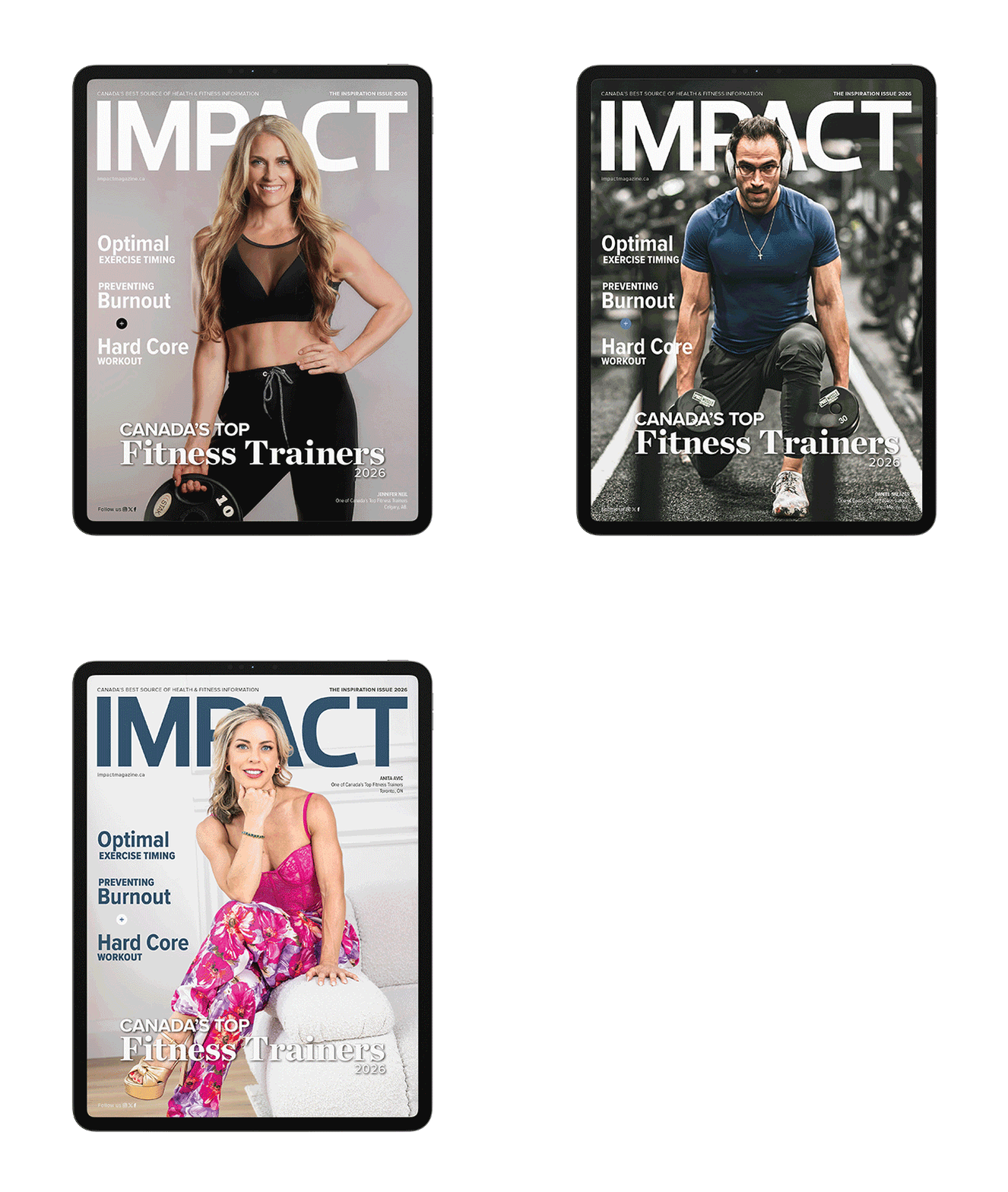
Read This Story in Our 2026 Inspiration Issue
IMPACT Magazine Inspiration Issue 2026
Meet 36 outstanding recipients of Canada’s Top Fitness Trainers, Class of 2026 in this highly anticipated issue!
Plus, when is the optimal time to workout, Mobilize your Training, AI Tools for Better Health, Strong Boned for Life, Prevent Burnout, The Anywhere Dumbbell Workout, Hard-Core Explore workout. Some amazing recipes, Easy Mixed Vegetable Samosas, Sambal Goreng, Citrus Cake and more!
This just scratches the surface of what you’ll find in this issue, so dive into the DIGITAL EDITION and be empowered for a fantastic 2026!