
What’s on the menu for today? Have you thought about it? Quite literally, have you considered your brain in your food selection? By not fuelling for your next workout or race, your choices may unwittingly help or hinder your efforts in both realms. What nourishes your sports performance so too affects your brain function. You ideally can accomplish both by aligning your food intake
Digestion begins with our first bite. Food is broken down to, depending on the substrate we ingest, glucose, amino acids, fatty acids, electrolytes, polyphenols, and vitamins. These nutrients fuel both performance and cognition. Our tissues draw in nutrients they need to perform tasks we impose on them.
When it concerns the nervous system, we rely on primarily glucose and in the case of fasting or a ketogenic diet, ketones is the source. Astrocytes, a subtype of glial cells that make up most cells in the human central nervous system, support the nervous tissue by increasing glucose metabolism to produce lactate. Neurons (functional units of the nervous system) use this lactate for energy. We need adenosine triphosphate—ATP, which currently provides energy production in the body—for sustaining our neuronal activity. Neurotransmitters, molecules that deliver information in the nervous system, are composed of amino acids, the building blocks of proteins. B-vitamins, iron, zinc, and iodine act as cofactors in these pathways. Choline—forming acetylcholine, another neurotransmitter—is neither a vitamin or mineral yet it has a huge impact on healthy brain development, muscle movement, your nervous system and metabolism. For example, docosahexaenoic acid (DHA), an essential omega-3 fatty acid, is bound to a phospholipid molecule, which is vital to the health of our cellular membranes and supports the brain, including facilitating transport across the blood-brain barrier. Vitamin D and magnesium further support the synapses—gaps through which information is transmitted—in the nervous system.
Most people are familiar with fuel ingested for sports performance. Powerful explosive movements rely on the ATP–phosphocreatine (ATP-PC) system. Our muscle stores rapidly donate a phosphate to adenosine diphosphate (ADP) allowing ATP to reform and provide us fuel for high intensity demands. For sustained efforts, muscle glycogen and fatty acids are required. Mitochondria, organelles that generate most of the cell’s chemical energy through aerobic respiration, are activated to match the effort. ATP and electrolytes are necessary for contraction including calcium and sodium/potassium gradients. Daily protein supports tendon/ligament remodelling and leucine-rich proteins also trigger mTOR for muscle protein synthesis. Examples of these proteins include meats, fish, and dairy. For a vegan source legumes and nuts are a fabulous option. 1.2-1.8kg/body weight is a recommended target of protein per meal. This is vital for synaptic plasticity, i.e. the adaptability to make new connections and prune the ones we don’t need.
Likewise, we need complex carbohydrates to maintain focus and sustain our activity. Daily carbohydrate consumption is recommended to be adjusted depending on the demands of exercise, with a range of 3 – 5 grams of carbohydrate per kilogram of an athlete’s body weight for “light” activity, to 8 – 12 grams per kilogram of body mass for “very high” activity.
Fats such as omega-3s, eicosapentaenoic acid (EPA), e.g. algae, docosahexaenoic acid (DHA) e.g. from fatty fish, and monounsaturated fatty acid (MUFAs) e.g., olive oil, may help an individual improve their exercise efficiency, recovery, and possibly prevent injury during intense training. For those on a vegan diet, alpha linolenic acid (ALA), e.g. flax, has been reported to help with neuroinflammation. Although classically known to provide energy, there is exciting evidence for the influence of dietary factors on specific molecular systems and mechanisms that maintain mental function.
Not to be forgotten, ingesting fibre is recommended as it may modulate health through the interaction with the gut microbiome. The aim for fibre is 25 – 38 grams/day. The gut-brain axis is now well documented, and we now know we must feed the gut microbes to nourish the brain. Our food not only fuels our workouts but also figures prominently in interactions with the brain.
Lastly, try to consume fluids/electrolytes as they have demonstrated the ability to reduce levels of fatigue, confusion, and total mood disturbance. During exercise lasting more than one hour and causing fatigue, athletes are advised to consume a carbohydrate source that is rapidly converted to blood glucose, while electrolytes should be included in fluids consumed during exercise lasting more than one to two hours.
Give your ingestion some thought and fuel your workout mindfully. Every meal and drink may be an opportunity to up your mental and physical game.
SUGGESTED FOOD OPTIONS
- Broccoli/broccoli sprouts: Sulforaphane, vitamin C/K, fibre, and gut health.
- Mushrooms (shiitake/cremini): Beta-glucans for immunity; ergothioneine, a potent antioxidant.
- Beets: Natural nitrates → nitric oxide for blood flow, endurance, and brain perfusion.
- Garlic: Allicin and organosulfur compounds for cardiometabolic and immune support.
- Berries (blueberries): Polyphenols that aid neuroplasticity and vascular health.
- Leafy greens (spinach/kale): Rich in vitamins, minerals, fibre, and antioxidants.
- Legumes (lentils/beans): Fibre and protein for sustained energy.
- Hemp seed: Balanced ratio of omega-3 and omega-6 fatty acids, complete plant-based protein with all essential amino acids, high fibre content, reduces inflammation, and supports brain and skin health.
- Kimchi: Supports digestive health by promoting a healthy gut microbiome & boosts the immune system.
- Tofu: A complete plant-based protein and is rich in essential nutrients like calcium, iron, and magnesium, contributing to bone and heart health.
You may also like: The Five-Step Secret to Meal Prep Success
Read This Story in Our 2025 Fall Fitness Issue
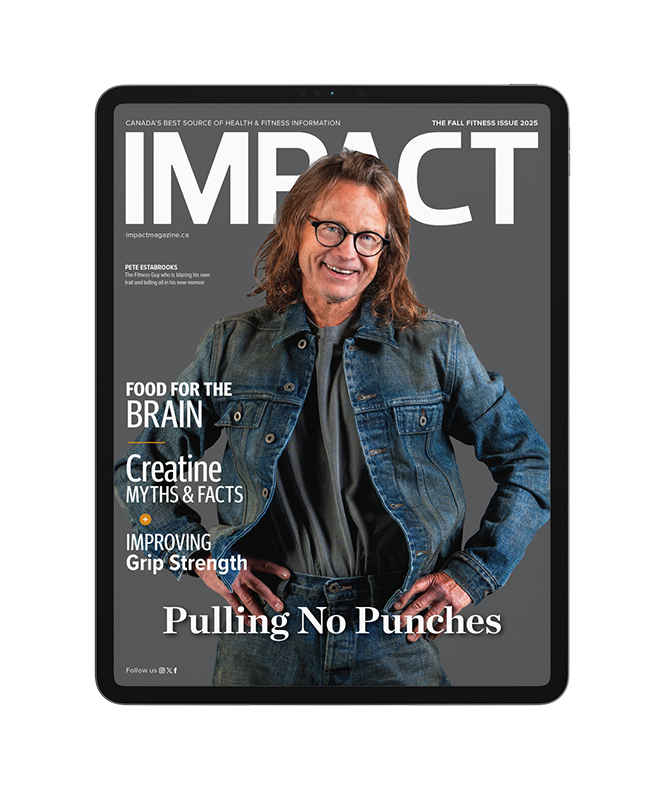
IMPACT Magazine’s Fall Fitness Issue 2025 featuring the The Fitness Guy, Pete Estabrooks, telling all with his shockingly candid new memoir revealing a story you never expected, as well as former pro soccer player Simon Keith and Paralympian Erica Scarff. Find your ultimate guide to cross-training for runners, no jump cardio and superset workouts along with the best trail running shoes in our 2025 Trail Running Shoe Review, and so much more!