
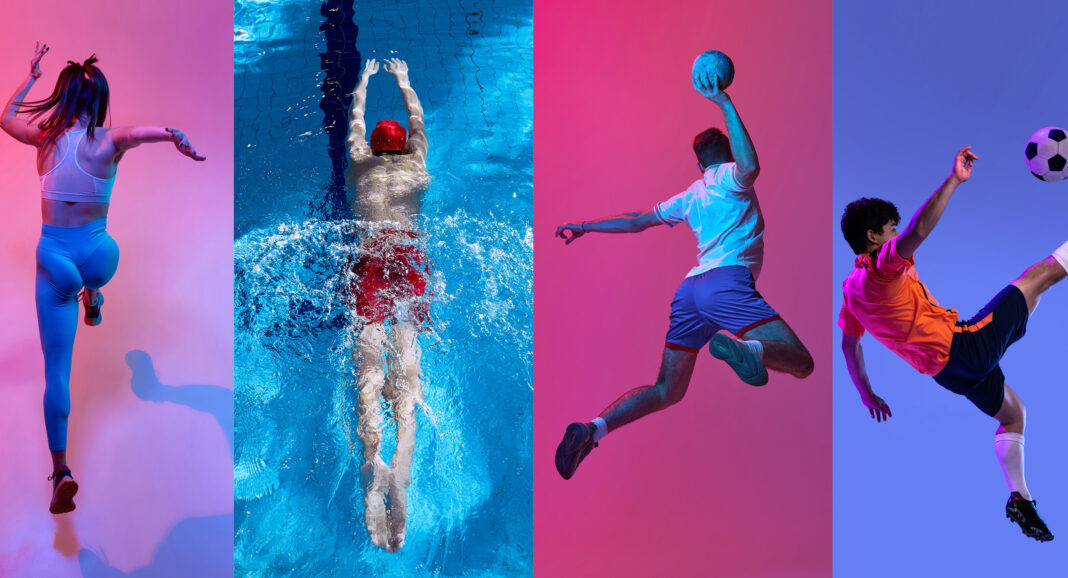
Sampling can be defined as an approach that encourages children to experience a number of different sports or activities with qualified instruction, or a number of different positions within a sport. Arguments in favour of sampling note that it does not restrict elite development in sports where peak performance is typically witnessed after maturation; it is associated with longer sporting careers and facilitates long-term participation in sport; it positively affects youth development; and deliberate play serves as a foundation for intrinsic motivation and provides a range of motor and cognitive experiences. In contrast, early specialization involves intensive year-round training in a single sport from a young age, which likely limits the child’s exposure to a breadth of sporting activities. Although researchers and youth fitness specialists have debated the advantages and disadvantages of both approaches for youth development, concerns are now growing about the inherent risks associated with early specialization.
Despite support for sampling, it is not uncommon for youth to specialize in a single sport from an early age where apparent benefits of early specialization are promoted. It is now acknowledged, however, that early specialization potentially increases injury rates, likelihood of burnout, and eventual disengagement from sport and physical activity. One particular concern focuses on the increasing incidence of overuse injuries related to participation in a single sport or a single position in a sport. Specialization subjects children to high volumes of repetitive training that promote the monotonous development of a narrow range of movement patterns, and provides insufficient opportunities for rest, recovery, and adaptation. Such an approach to physical development can lead to repetitive submaximal loading of the musculoskeletal system, which may result in overuse injury. For example, research indicates that when a high volume of baseball pitching is completed in the absence of developmentally appropriate preparatory physical conditioning, the risk of overuse injury in the shoulder or elbow is likely to increase in young athletes.
Beyond the importance of sampling with qualified instruction to reduce the risks of overuse injury, sampling is also central to the development of athleticism. Fundamental movement skills and requisite levels of muscular strength serve as the building blocks for global, more complex movements at a later stage of development. Therefore, for all children, possessing competence in a breadth of movement skills is more important than acquiring a depth of mastery in a very narrow range of skills.
For example, early maturing children who are taller and stronger than peers may be encouraged to play the centre position on a high school basketball team. However, even if they succeed, they risk developing only a finite number of movement competencies that are specific to that position if they engage only in sport- and position-specific practice sessions and competitive basketball matches from an early age. In addition, they will typically be at a heightened risk of developing muscular imbalances and asynchronous movement discrepancies, which, in the absence of targeted training programs to address neuromuscular deficiencies, will fail to prepare them for the demands of sport practice and competition. In such cases, though they may develop proficiency in basketball-specific skills, their athleticism and ability to use transferable motor skills in different positions, different sport environments, and different physical activities will likely be reduced, both on the playground and in sport settings.
We also find a need for sampling when we take a global health perspective on helping young people develop a broad range of movement skills to promote a satisfactory level of physical literacy. This notion is supported by research showing that children who possess, or perceive themselves as possessing, competent fundamental movement skills are more likely to engage in sport and physical activity, both throughout childhood. In addition, motor skill competence has been shown to be inversely associated with overweight and obesity during childhood. Moreover, motor skill competence appears to decline over time thus highlighting the critical importance of early engagement in appropriate training for long-term athletic development.
Empirical data from research in 2011 have shown that specializing later and being exposed to lower volumes of deliberate practice early in life act as significant determinants of elite performance in adulthood. Specifically, the authors collected retrospective data about the careers of a sample of 243 Danish athletes from sports measured in centimetres, grams, or seconds (e.g., track and field, weightlifting, swimming). The data showed that elite athletes (those who achieved a top-10 finish in a world championship or medaled at the European level) accumulated fewer hours of practice in their main sport during childhood and adolescence than did near-elite athletes. In the study, age at the time of first competition was about 14.5 years for elite athletes and 12.4 years for non-elite athletes. Overall, the study indicates that athletes who accumulate more hours of specialized practice and focus on competitions at an earlier age may initially experience relative success yet be unable to maintain it as they grow older. The study also showed that elite athletes intensified their training toward the end of adolescence, which resulted in a higher accumulation of training hours around the time of early adulthood.
Research also shows that greater sport diversification in early years and later specialization leads to improved physical fitness performance and superior gross motor coordination in six- to 12-year-old boys. In a sample of 735 boys, individuals were categorized as either single-sport or multisport participants. Across all three age groups (six-eight, 8-10, and 10-12 years), boys involved in multiple sports spent more time on sport per week (on average, one or two additional hours). More specifically, the research reported two key findings for the 10- to 12-year-olds: those who participated in more hours of sport per week performed better than those who participated only periodically, and those who specialized in a single sport performed significantly worse in terms of gross motor coordination and standing broad jump tests. Combined, these findings suggest that youth benefit from greater exposure to a variety of sport and physical activities (tempered with appropriate rest and preparatory conditioning) and that early specialization can lead to reduced physical performance and a blunting of motor coordination.
Aside from the potential benefits for physical performance, research has also shown that later specialization leads to reduced injury risk in adolescent females. A 2015 study showed that in a sample of 546 female youth athletes (comprising middle and high school years), early specialization increased the relative risk of knee-related injury by a factor of 1.5. Diagnoses included patellar tendinopathy and Osgood-Schlatter disease, the latter of which showed a fourfold increase in relative risk in single-sport specialized athletes versus multiple-sport athletes. These data show that diversification appears to be beneficial not only for physical performance but also for reducing the relative risk of injury in youth. Consequently, it would seem prudent for any long-term athletic development model to accommodate a diversification approach that enables children to sample a range of activities and sports before specializing in a single sport or activity at a later stage of development.
Extract from Essentials of Youth Fitness, backed by the American College of Sports Medicine (2020). Edited and reprinted with permission of www.Canada.HumanKinetics.com.
You may also like: Jump Start

Read This Story in Our 2025 Fall Fitness Issue
IMPACT Magazine’s Fall Fitness Issue 2025 featuring the The Fitness Guy, Pete Estabrooks, telling all with his shockingly candid new memoir revealing a story you never expected, as well as former pro soccer player Simon Keith and Paralympian Erica Scarff. Find your ultimate guide to cross-training for runners, no jump cardio and superset workouts along with the best trail running shoes in our 2025 Trail Running Shoe Review, and so much more!