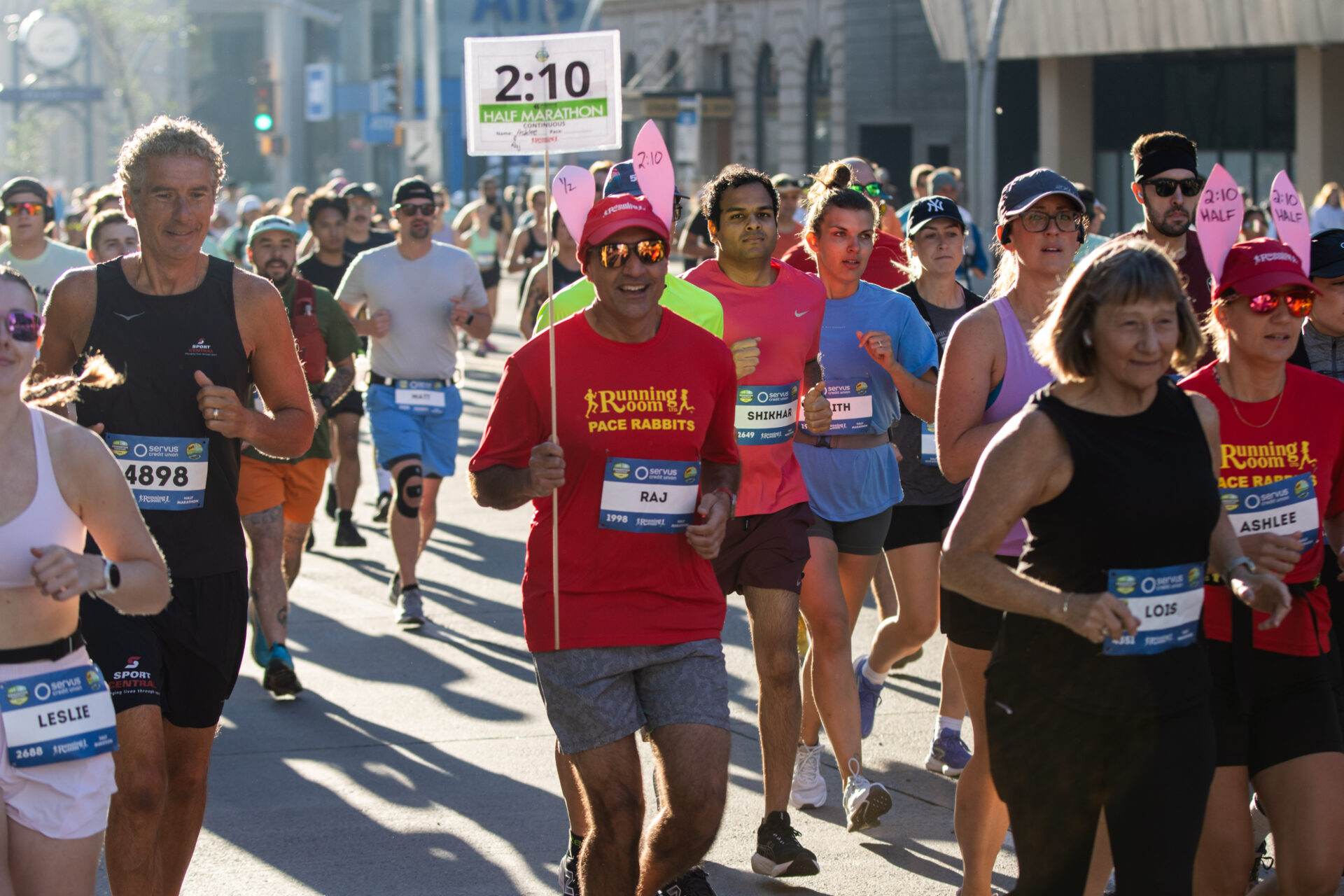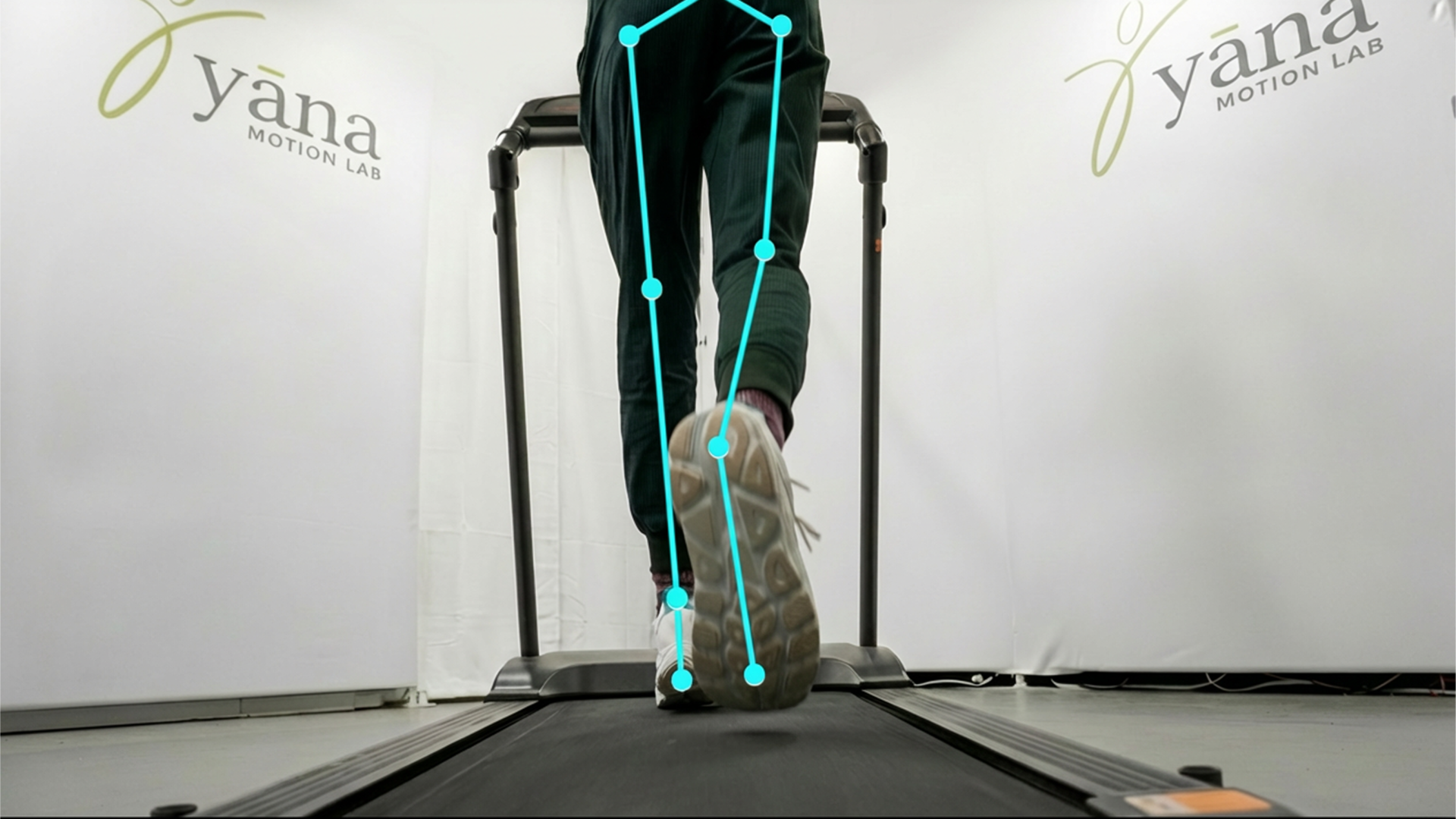

For distance runners, strength training isn’t about building bulk it’s about improving efficiency, resilience, and force production over thousands of strides. This workout targets the posterior chain, ankle stiffness, and lumbo-pelvic stability, all critical components of running performance. Movements like back squats and walking lunges build hip-driven strength and single-leg stability, helping runners apply more force into the ground rather than absorbing it. Over time, this improved force application can translate into increased stride length, better running economy, and improved speed without increasing effort.
The addition of calf raises, isometrics, and double-leg hops further strengthens the Achilles and lower leg, improving tendon durability, reactive strength, and fatigue resistance. This is especially important late in races, on hills, or when running on uneven terrain. Together, these exercises build a stronger, more efficient runner, one who can maintain form, generate power, and reduce injury risk over the long haul. Even small gains in stride efficiency repeated over thousands of steps can make a meaningful difference in performance.
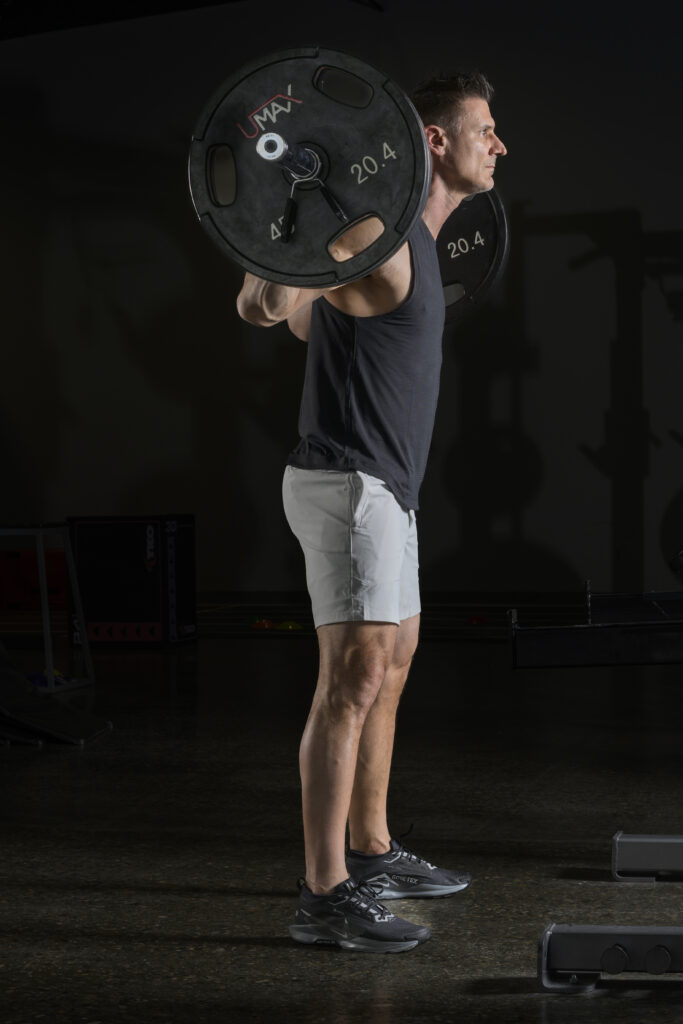
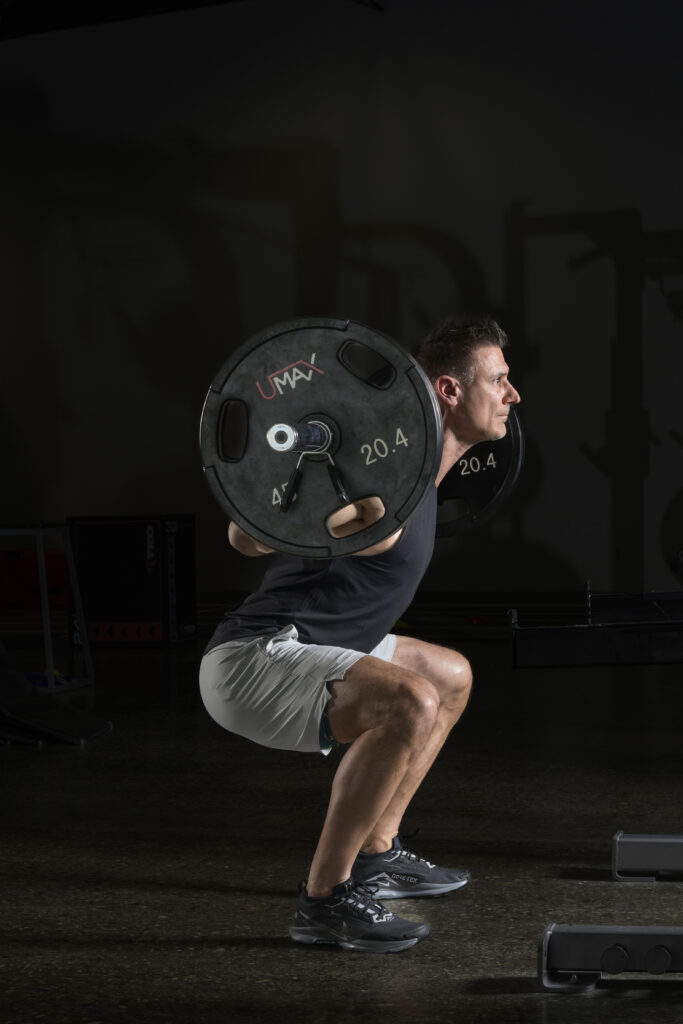
Back Squat
3-4 sets x 4-6 reps
- Grip a bar 2-3 inches beyond shoulder-width and rest it on rear deltoid/bottom
part of upper trapezius. - Step back while staying in the middle of the rack and plant feet just beyond
shoulder-width, toes slightly turned out. - Stand tall/long through torso by lifting in and up with the belly button.
- Rotate slightly through both femurs, which will engage the gluteus medius muscles
and help stabilize the knees and pelvis. - Push hips down through the heels, staying active through the hip and passive through
the knee. Stay tall above the hips while keeping the femurs externally rotated with full
foot contact. This position will allow you to maximise the stretch in the hamstrings. - Squat to parallel, while maintaining lumbo-pelvic integrity, then push up from your heels, through your torso line, engaging hamstrings and glutes.
The why?
Before initiating the squat, remember you are looking to build strength while keeping the movement pattern in line with sprint and jump mechanics, which means maintaining lumbo-pelvic stability (LPS) while driving from the hips. It’s not functional if you are not moving through the hip and knee together, because this is what happens when you run and jump. This squat position also helps maximize posterior-chain engagement.
If you can’t maintain strength through the lumbo-pelvic area and posterior chain over the long haul, you absorb force instead of applying force where needed. The more force applied the greater the stride length and speed. My old coach would say the difference between a four-hour and a three-hour marathon is two inches of stride length for every stride. Doesn’t it make sense to increase strength and power from the hip in the correct way to help you in your race?
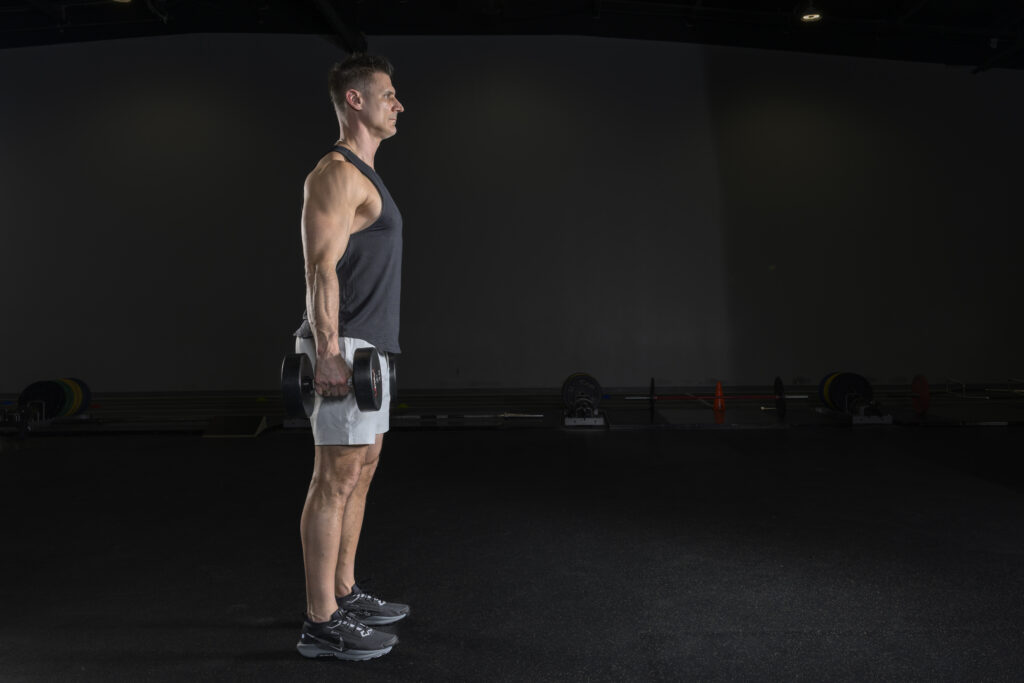
DB Lunge Walk
3 x 8/Leg
- Hold dumbbells at sides (arms long, relaxed like chains), shoulder blades together and down, maintaining scapular integrity. Stand tall/long through the torso, imagine standing at attention.
- Step forward, heel first. Keep the front knee forward facing or very slightly externally rotated. This provides more stability and engages the right muscles. The shin and knee are either stacked over the ankle, or the knee is shifted slightly forward, but not directly over the toe. Back knee is hovering over but not touching the floor.
- Initiate the lift with the front leg by pushing up through the heel, knee and hip open at a similar rate, hitting a full standing position on that leg. Weight will transfer from heel to toe as you hit full extension in the hip, while bringing the back leg through and forward. Remember to initiate the hamstrings and glutes with the front leg as you step through.
The why?
We are trying to maximise posterior-chain engagement. As in the squat, maintain scapular and lumbo-pelvic integrity while moving through the knee and hip at the same rate. This will help increase stride length. And because of the unilateral position the ankle joint will increase both stabilization and strength. Roads are never perfectly flat, and the ankle joint is one that loses strength the quickest as we age.
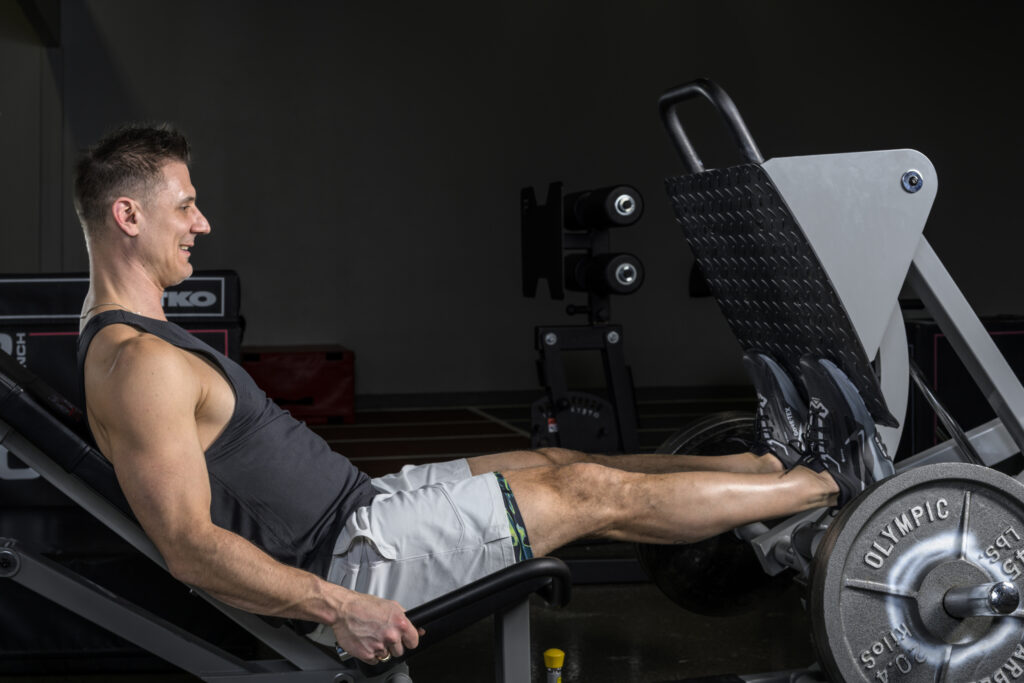
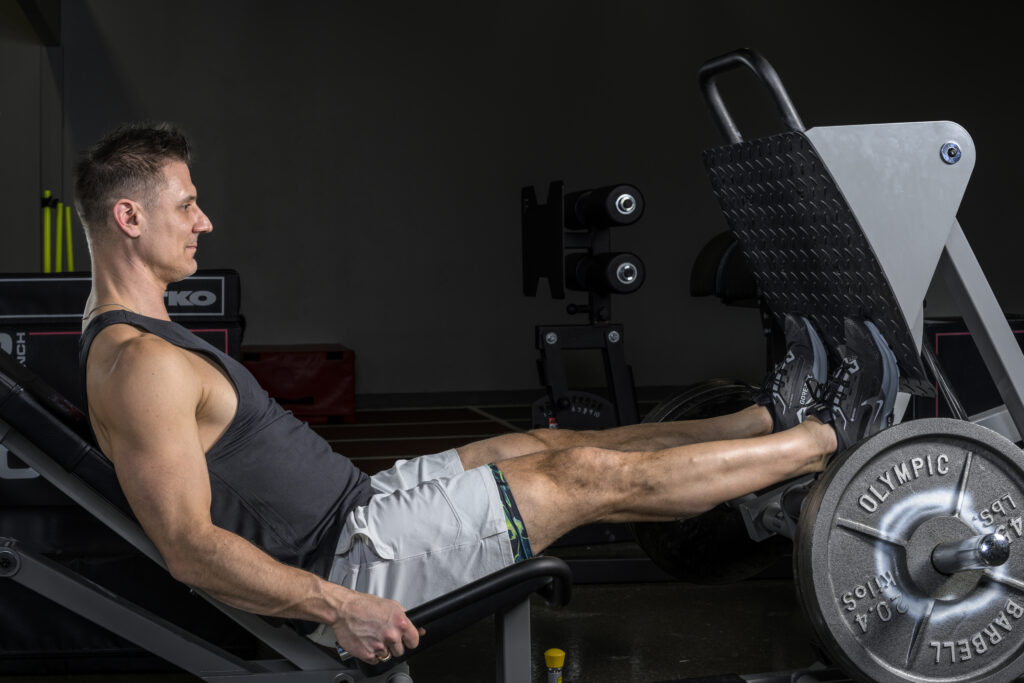
Calves (Raises and Isometrics) Calf raises on a leg press machine
2-3 sets x 8-15 reps
- Sit on the machine, feet shoulder-width apart on the platform.
- Through the balls of the feet raise the platform as high as possible with straight legs and soft knees (a slight bend, not locked out), contracting the calf muscles.
- Slowly lower the platform (2–3 seconds) to feel a stretch in the calves, heels pushing up as the toes descend.
- Maintain stiff ankles so they don’t collapse.
Calf Isometrics
2-3 sets x 30-45 sec
- Through the balls of the feet raise the platform as high as possible with straight legs and soft knees (a slight bend, not locked out), contracting the calf muscles.
- Hold the weight at full extension and maintain steady tension through the duration of the set.
The why?
This isometric combination can help with injury prevention and rehabilitation of the Achilles tendon. It also improves tendon strength and fatigue resistance. Raises can help with push-off force, tendon load capacity to safely handle repeated force, and stride/ankle stiffness which improves force transfer. This leads to less fatigue, lower injury risk and better force transfer.
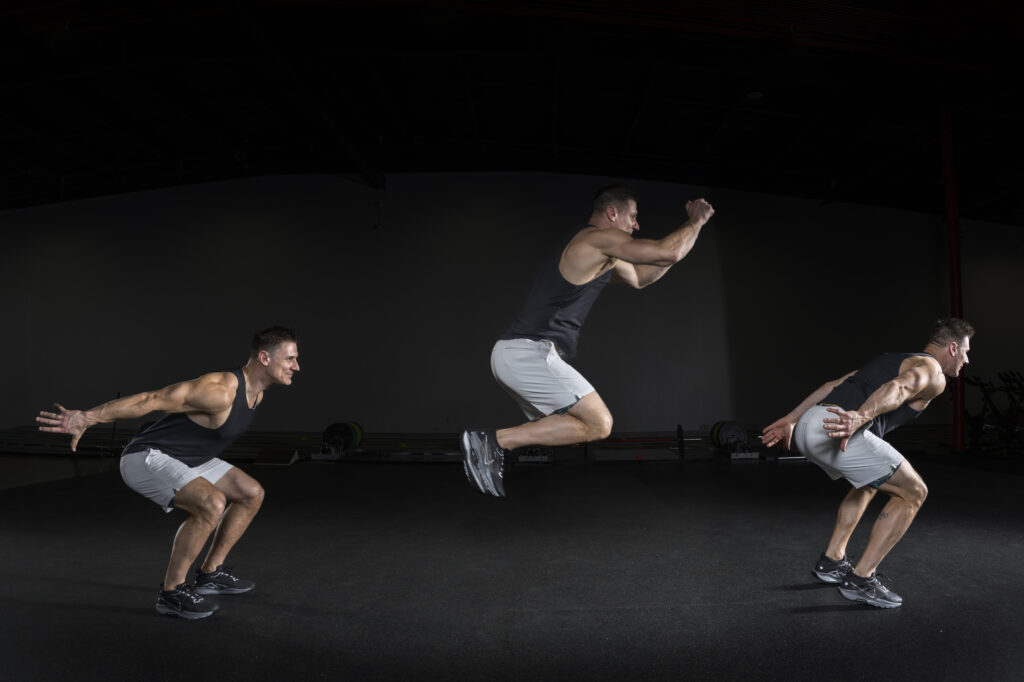
Double Leg Hops for Distance
Reps x3, x5, x7, x9
- Start with feet hip- or shoulder-width apart weight on heels.
- Drop through the hips and knees, hands going back with the hips as low as is needed to produce maximum force in each jump.
- Initiate the jump, transferring your weight from heels to toes and driving the hips forward, generating power down through your knees, ankles and all the way through your toes. Your arms will swing through just before or as your hips extend.
- Because you are jumping for distance, direct your power going forward.
The why?
This helps Achilles tendon loading capacity, stride/ankle stability, reactive strength and power endurance (the ability to produce repeated force over time even when fatigued). There might be a hill or two when you are running!
Photography: Graham McKerrell
You may also like: Workouts
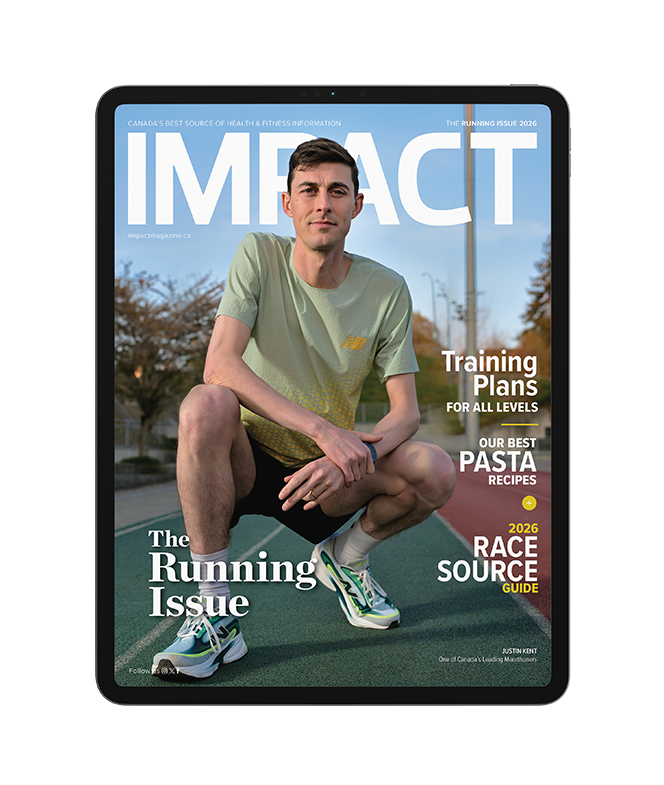
Read This Story in Our 2026 Running Issue
IMPACT Magazine Running Issue 2026 features a rising marathoner quickly climbing the ranks. Discover and travel to your next favourite marathon, prepare for your next big event with expert training plans, and dive into strength workouts and runner-focused articles. Plus, enjoy delicious pasta recipes and so much more.
This just scratches the surface of what you’ll find in this issue, so dive into the DIGITAL EDITION and be empowered for a fantastic 2026!