
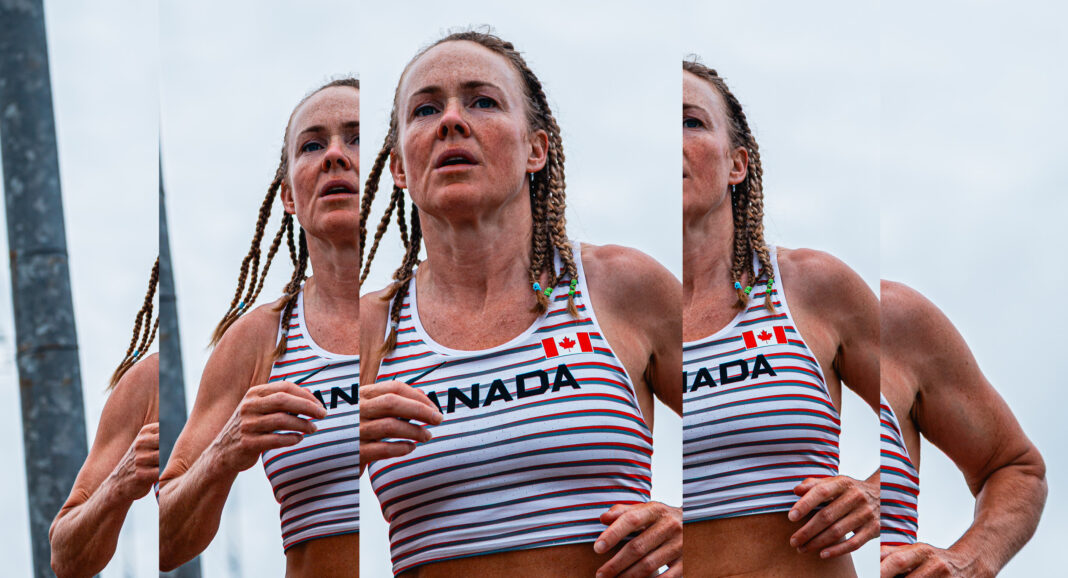
When Shanda Hill found triathlons after recovering from a traumatic brain injury, little did she—or the triathlon world—know that she would become one of the best ultra-triathletes in the world, breaking records and undertaking feats that no one else on earth has done.
Born in Chilliwack, B.C., and raised in Vernon, B.C., Hill spent much of her teenage years and young adult life competing in BMX racing. And she was good, achieving titles in various categories across national BMX events.
But Hill’s BMX dreams were stopped in their tracks one fateful spring day in 2003. The young athlete was riding her bike on a road near her hometown when a Chevy Blazer 4×4 SUV, weighing some 4,000 pounds, hit Hill from behind, sending the 21-year-old BMX rider flying from her bike.
The accident left Hill with a traumatic brain injury and severe trauma to her back.
The future was suddenly uncertain. There was no assurance that she would fully recover. She was told she wouldn’t race again. Hill’s memory was impacted, her equilibrium, depth perception, and quick-twitch timing—an essential response needed for split-second reactions in BMX—were all damaged.
Hill admits that about five years into her rehabilitation, she came to a realization:
“I had been expecting that at some point medical professionals would be able to put my life back together,” she says. “And I came to a point where I realized there was nobody who was going to give me back what I wanted, which was my life before the accident.”
Hill decided that the only way forward was to pick up the pieces and move on with what she had. Eventually, that meant turning to running.
The rest? It was all just happenstance. A friend suggested Hill try a triathlon. A few short years after competing in her first triathlon—an Ironman distance—another friend suggested that she look into an ultra. Then an ultra became a double-ultra and then a triple and now Hill is shattering records everywhere she goes.
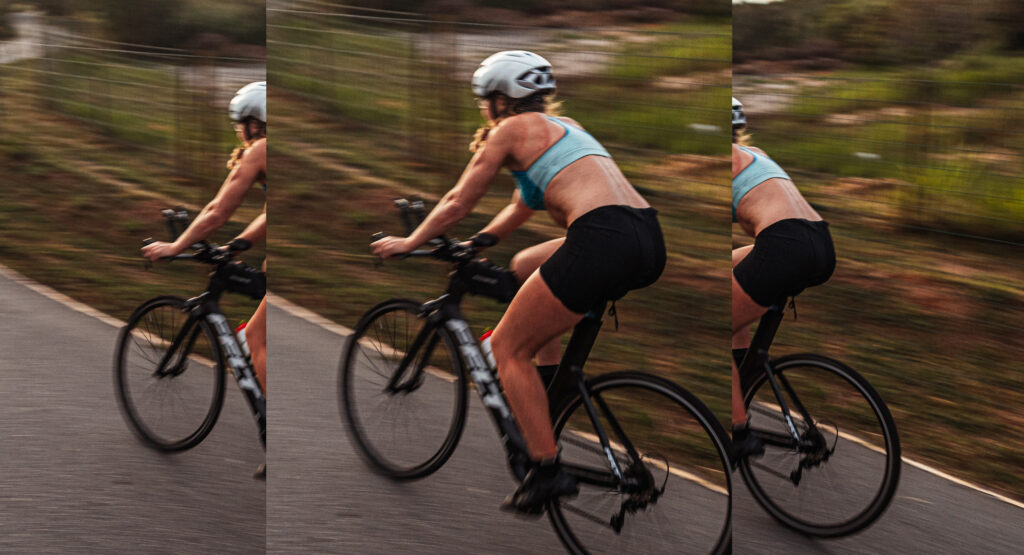
She’s currently the only person on earth to complete three double deca triathlon continuous races, which is equivalent to 20 Ironman triathlon distances completed in one effort. That’s a 76-kilometre swim, 3,600-kilometre bike ride, and 844-kilometre run.
She is also the first woman ever to complete a triple deca triathlon continuous, consisting of a 114-kilometre swim, a 5,400-kilometre bike ride, and a 1,266-kilometre run. And on top of that, Hill holds the women’s world record for the most International Ultra Triathlon Association (IUTA) Ironman distances completed.
But for the B.C. native, it’s not about the records.
“It’s about searching for excellence inside my soul to know what I’m capable of,” says Hill.
And she keeps proving time and time again that she’s capable of phenomenal things.
In March of this year, Hill competed in the Ultra Tri South Africa, finishing the 10x continuous ultra in 279 hours and 30 minutes. She was the first and only woman to cross the finish line and finished an incredible second overall.
Amazingly, ultra triathlons are not Hill’s day job. Between races, she works for a natural food store in her hometown and does landscaping work in the summer. She lives on a farm with her teenage son, two dogs, three goats, one miniature horse, and two cats, providing a peaceful yet spirited environment that is much-needed between races.
As for training?
Hill acknowledges that her landscaping work could be considered cross-training as it’s hard on the body, but that’s certainly not why she does it.
“I’m not a big believer that more miles are going to make me a better athlete,” she says. “I think that rest and recovery is the most important thing.”
Citing nine hours of sleep—much more than the maximum three hours she gets during races—as crucial to her recovery, Hill attributes her success in triathlons to figuring out how to nourish her body properly.
“I believe the key component to everything exercise—and life in general—is when you can find good nutrition. When you can put good nutrition into your brain, you can make good choices, and every other area of your life will benefit from it. We can make our lives better.”
As for what that nutrition is? Between races she gets most of her protein from tofu. Nuts and carbs are also important to her diet—with bread and chocolate two of her favourite staples.
During races, it’s all about the calories. Hill takes in thousands of calories a day, constantly eating when she has the chance. Her go-to is a special cashew and vegetable soup mix that she crafted herself, paired with tofu and piles of veggies.
Another critical element for the ultra-triathlete in between races has been oxygen therapy, which she says is the only real training she gets besides work. Hill explains that twice a week she sits on a bike while wearing a mask, and a trainer flips a switch to reduce oxygen to 11 per cent. Then, they perform intervals of flooding her body with 80 per cent oxygen.
The biggest impact Hill has seen with oxygen therapy is in her sleep. Managing sleep was one of her biggest struggles when she was first starting out in ultra triathlons. Due to her brain injury, Hill suffered more than most people with the lack of sleep. Six hours a night was the minimum her body required to have maximum performance.
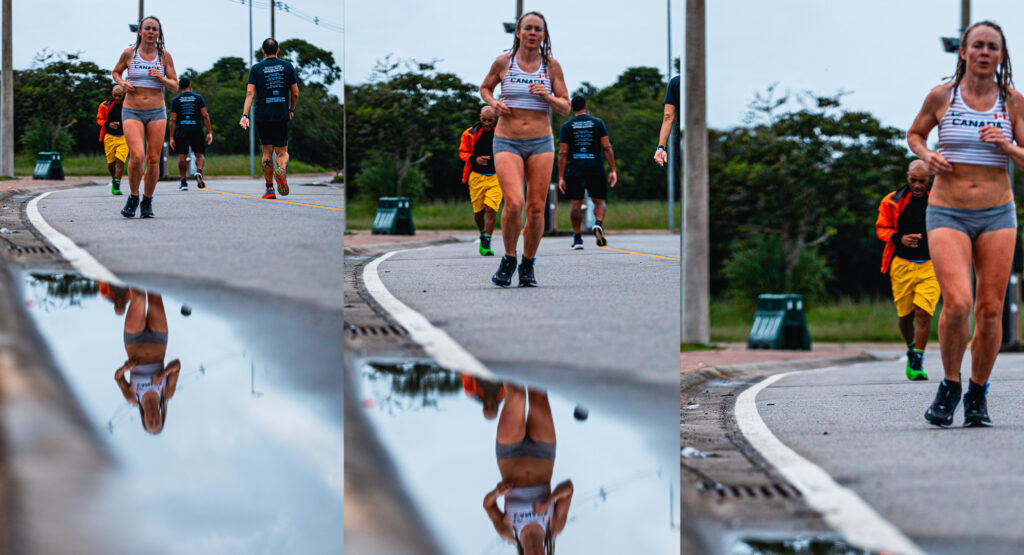
“What’s fascinating is that since I started doing oxygen therapy, I’ve been able to get my sleep down to three hours a night and not have fatigue,” says Hill.
Hill’s oxygen therapy is provided at a discount by one of her sponsors, Eve Volve Wellness. But astoundingly, Hill isn’t backed by any major sponsors. Rancho Vignol provides food, and The Starting Block hooks her up with shoes. But it’s all thanks to donations on her website—shandahillultra.com—that she is able to travel the world and compete.
“[Donations] have mostly been by Canadian people who have stepped forward and said, ‘We want to see you achieve your goals,’” says Hill.
And it’s not hard to imagine why Canadians are getting behind their superstar from B.C. Hill’s grit and resolve are unparalleled, and she’ll stop at nothing to compete.
In 2016, during Hill’s first year racing ultras, she tore her quad muscle during the USA Ultra Triathlon Quintuple Anvil, which consists of a 19-kilometre swim, 900-kilometre bike ride, and 210-kilometre run, all to be completed within a 132-hour time limit.
“To date, it’s been the most painful injury I’ve ever had. I didn’t know how I would continue,” says Hill. “I was so invested in that race. I sacrificed so much to be at that race, and there was a desire in me to finish.”
Despite the injury, Hill made the decision to keep going. She says that within half an hour, her torn quad went numb. Not only did she finish the race with 15 hours to spare, she was the first woman to cross the finish line.
And in June of this year, while racing the Bretzel Ultra Triathlon in Colmar, France, Hill had an accident when getting off her bike. Her shoe didn’t unclip in time and she hit her ankle on the pedal, opening a deep cut that required stitches.
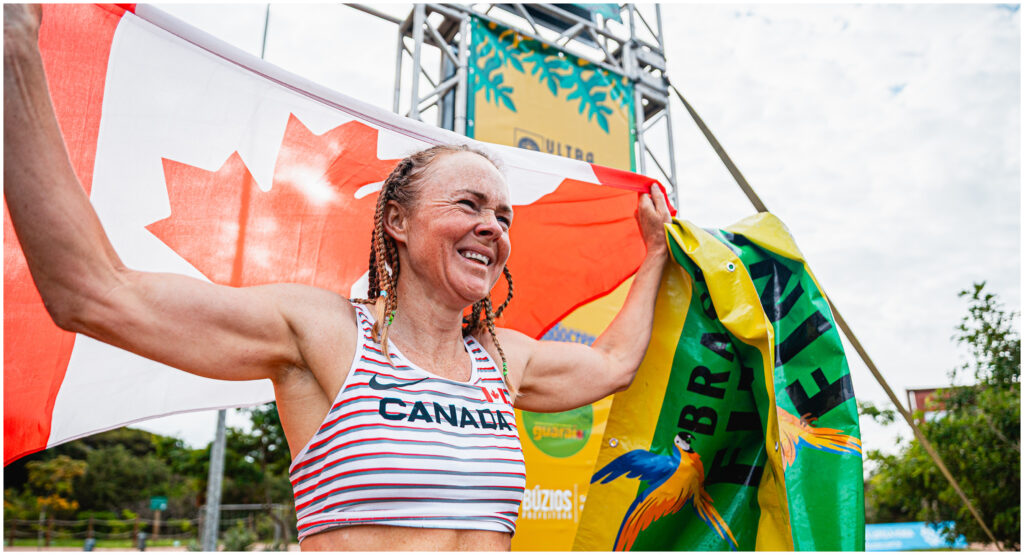
She was asked to stop and go to medical. She said no. Luckily, one of her support crew was able to stitch her up so she could power on.
With a bruised and stitched ankle paired with extreme temperatures climbing into the mid-30s, the 422-kilometre run took a toll on the unyielding athlete. Despite the injury and relentless heat, Hill still came home to finish first place among the women and second overall.
Hill repeatedly demonstrates that there is no limit to what the body and mind can achieve. She’s breaking barriers, setting records, and showing that determination and resilience are key ingredients for reaching our potential.
“I’m in awe of what our bodies can do,” she says.
And on whether she will continue chasing incredible feats in ultra triathlons, she has this to say: “I still have a love for it. I still have a passion for it. [I wonder] what else is possible? And so, I am still exploring what my own potential is.”
One thing is for sure: Canadians and the world over should keep an eye on Shanda Hill from Vernon, B.C., because she is a fighter—a powerhouse—and she will continue to achieve greatness.
Photography: Paulo Henrique Pigozzi
You may also like: Cover Stories
Read This Story in Our 2025 Summer Outdoor Travel Issue
IMPACT Magazine Summer Outdoor Travel Issue 2025 featuring Shanda Hill, a Canadian Ultra Triathlete who is redefining the sport. Run on some epic trails in our own backyard or join a run club. Eat your way for Mental Clarity, fueling while travelling, seasonal eating and some kitchen must haves. Become strong and fit in only 20 minutes a day, and enjoy some tasty drinks guilt free and so much more.