
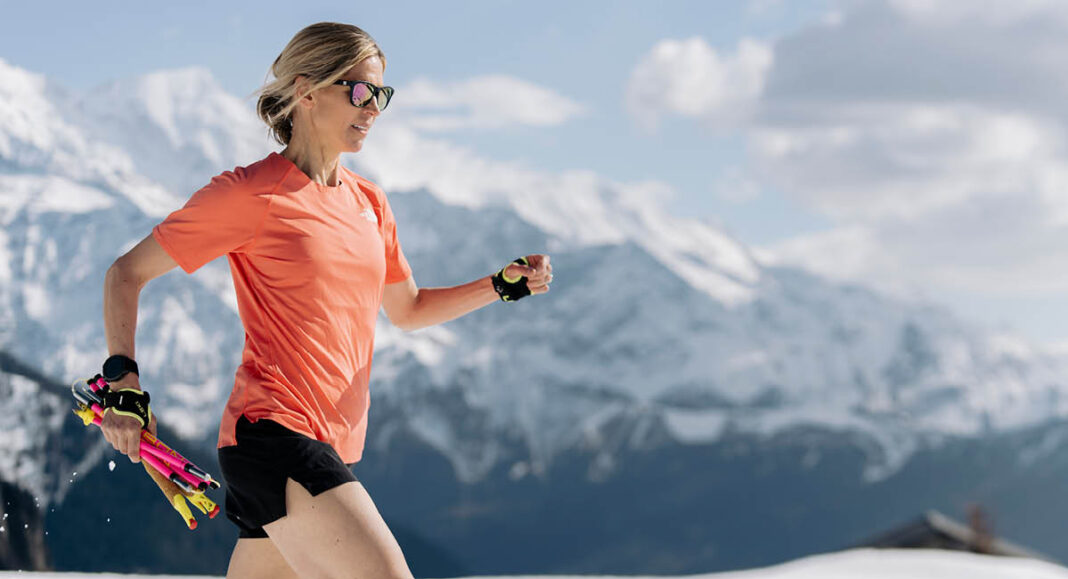
Crossing the finish line of the gruelling Hardrock 100 while holding her daughter Pepper wasn’t just about a comeback for ultrarunner Stephanie Case—it was a statement about motherhood, resilience and rewriting what it means to be an endurance athlete.
It was a punishing race for the mother, but despite the sleepless and nausea-ridden race, Case knew there was only one thing that mattered.
“I didn’t want to show up on the finish line destroyed,” she says. “Pepper comes first.”
A few months before Hardrock 100, in May of 2025, Case made headlines when photos of her breastfeeding a then-six-month-old Pepper during the Ultra-Trail Snowdonia race in Wales went viral.
Case had to get special permission from race organizers to add an extra stop to the course so she could feed Pepper for a third time during the 100-mile race. Despite the extra stop, she still managed to place first among the women.
The Ultra-Trail Snowdonia was Case’s first ultramarathon postpartum and her first in nearly three years. After suffering a miscarriage in 2022 and taking a hiatus from running due to fertility struggles, Case said it was just as important for Pepper as it was for her to get back into running.
“Mentally, it was the best thing to do,” she says. “Every time I went out, I connected with my old self that hadn’t changed.”
While running felt physically trying after giving birth, Case says that realizing she was still a runner helped her process all of the changes that come with becoming a mother.
Snowdonia was an extension of that, and making sure Pepper was fed during the race was just a piece of the logistical puzzle she had to work out. While some applauded the new mother for her dedication and determination, others felt it was selfish and performative.
“It speaks to the patriarchal, outdated ideas of what a new mom should look like,” she notes. “I’ve really worked to respond to those comments … A happy mom is really important for baby.”
While Snowdonia was a confidence boost, Hardrock was a reality check. Back at work as a UN human rights lawyer, Case was balancing long hours with the demands of training, all while caring for Pepper.
“It was a reminder for me of how much moms go through,” she says, “but what is possible to do with support.”
The Hardrock 100 is an unforgiving physical test, pushing participants through 100 miles (160 kilometres) and a total elevation change of 20,237 metres. For Case, it carried an emotional weight too—it was the same course where, shortly after racing it in 2022, she first learned that she was pregnant. She was there to close a loop.
Yet, 30 miles in, she was throwing up.
It was a reminder for me of how much moms go through, but what is possible to do with support.
“It was really tough to push through that,” she says.
This race was supposed to be a marker of all that the 43-year-old had achieved since 2022. Instead, she was in survival mode, running on four hours of sleep, caring for Pepper and battling the urge to quit.
“I had to remind myself why I was there,” she says.
“I just wanted to show Pepper I could do hard things.” Pulling back, she was able to get to a place where she could enjoy the last half of the race. Finishing fifth—and taking Pepper into her arms to cross the finish line with a bounce in her step—Case had stayed on pace with the top runners for the final leg and even beat her 2022 time by an hour.
While Case is determined to set an example for Pepper, she’s also helping girls and young women around the world. At the beginning of her ultramarathon career in 2014, while working in Afghanistan, Case was told she’d probably have to give up running while living and working in conflict zones.
“That was like waving a red flag in front of a bull,” she says.
Determined to use running to make a difference, she raised approximately $10,000 for a women’s shelter. But through that work, she learned the Afghan women really just wanted to be able to get outside themselves—something they couldn’t do because of the war and the type of abuse they had experienced. In the process of making that happen, Case founded Free to Run.
Operating in some of the world’s most challenging regions—including Iraq, Afghanistan and Palestine—Free to Run has helped create positive change in the lives of thousands of young women and girls by using running and rights-based programs to support leadership, agency and health.
Making women seen has been a pillar in those programs.
As Case puts it, “That can absolutely change this idea of what women should be doing.”
Case’s story has also been captured on film. Her first documentary highlighted the work of Free to Run, while her upcoming second film will follow her running journey, pregnancy challenges and her early days of motherhood. Three years of filming wrapped up at Hardrock, closing another loop for her.
The film will premiere at the August UTMB event, and Case hopes to see it on a streaming platform this fall after a film festival circuit.
For Case, challenging cultural norms and stigmas isn’t just part of her work and charity, it’s integral to her approach as an ultrarunner and mother. She’s proving what is possible when women are seen, supported and empowered.
Photography: Carrie Highman
You may also like: Athletes with IMPACT
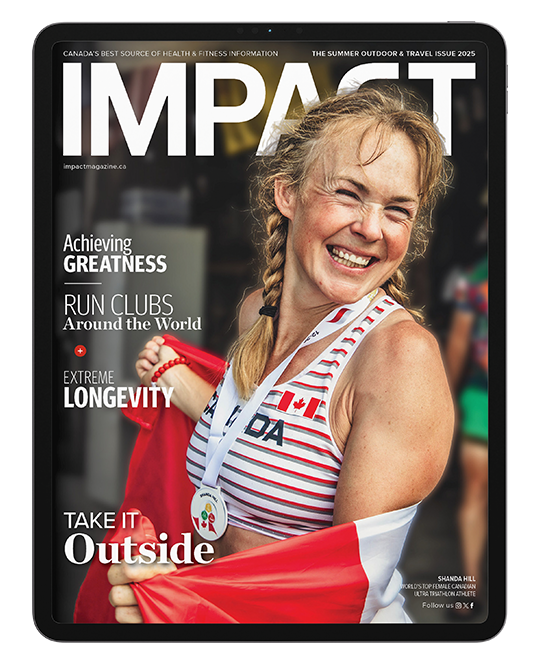
Read This Story in Our 2025 Summer Outdoor Travel Issue
IMPACT Magazine Summer Outdoor Travel Issue 2025 featuring Shanda Hill, a Canadian Ultra Triathlete who is redefining the sport. Run on some epic trails in our own backyard or join a run club. Eat your way for Mental Clarity, fueling while travelling, seasonal eating and some kitchen must haves. Become strong and fit in only 20 minutes a day, and enjoy some tasty drinks guilt free and so much more.