
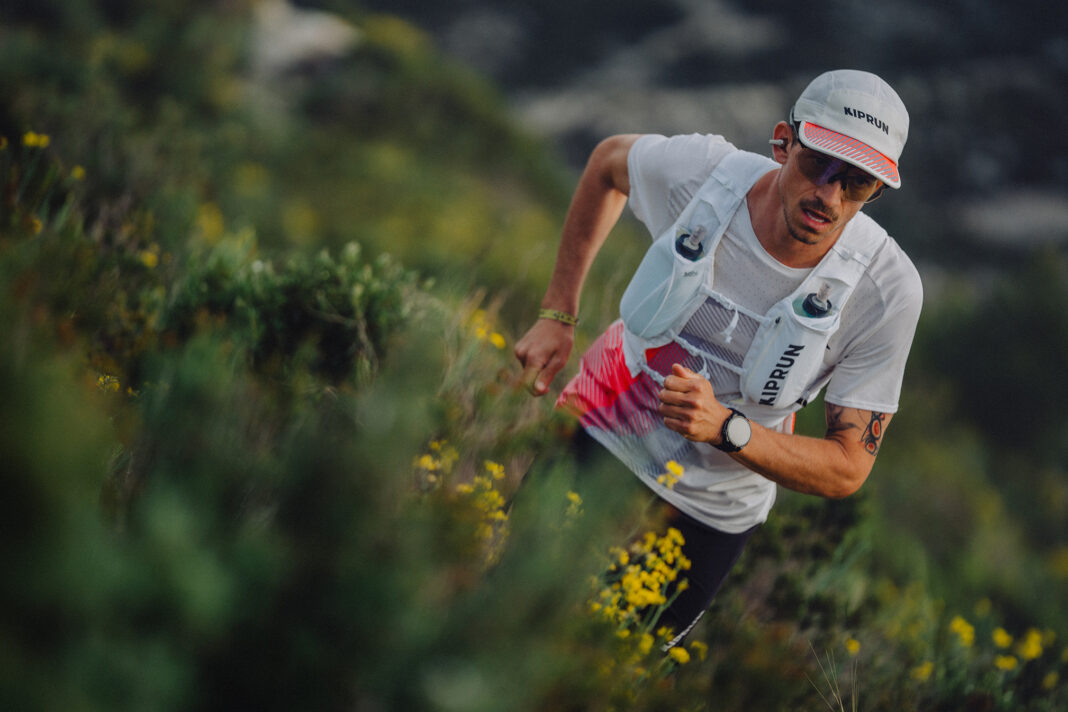
Imagine giving up your job as an engineer to chase the world’s most extreme physical challenges as a professional athlete. Well, that’s exactly what Mathieu Blanchard did. And as it turns out, he’s widely considered one of the best ultrarunners in the world.
Yet there’s more to this ultrarunner than just elite competition.
The French native studied as an engineer, moving from France to Montreal in 2014 to take a job in the energy field. It was here
that he discovered his love for adventure. He explains that when he was younger, he focused on the path that was presented to him—go to school, get good grades—rather than following his passion. He admits that if he had a sense of adventure in those younger years, it was buried somewhere inside him.
But moving to Montreal set him on a path toward adventure and a deeper connection with nature. Because it was during his time in Quebec’s vibrant metropolis that he found ultra-running.
“Around 30, I finally gave [my sense of adventure] permission to speak louder,” he says. “Maybe it was my ‘30-year-old crisis,’ but honestly, it was a pretty good one.”
The Canadian-French dual citizen explains that his love of ultra-running developed naturally. Put simply, he fell in love with it—with the emotions, the intensity, the long hours in nature.
“I love that strange feeling of ultra-endurance fatigue, when your body is tired but your mind starts opening in a different way,” he says.
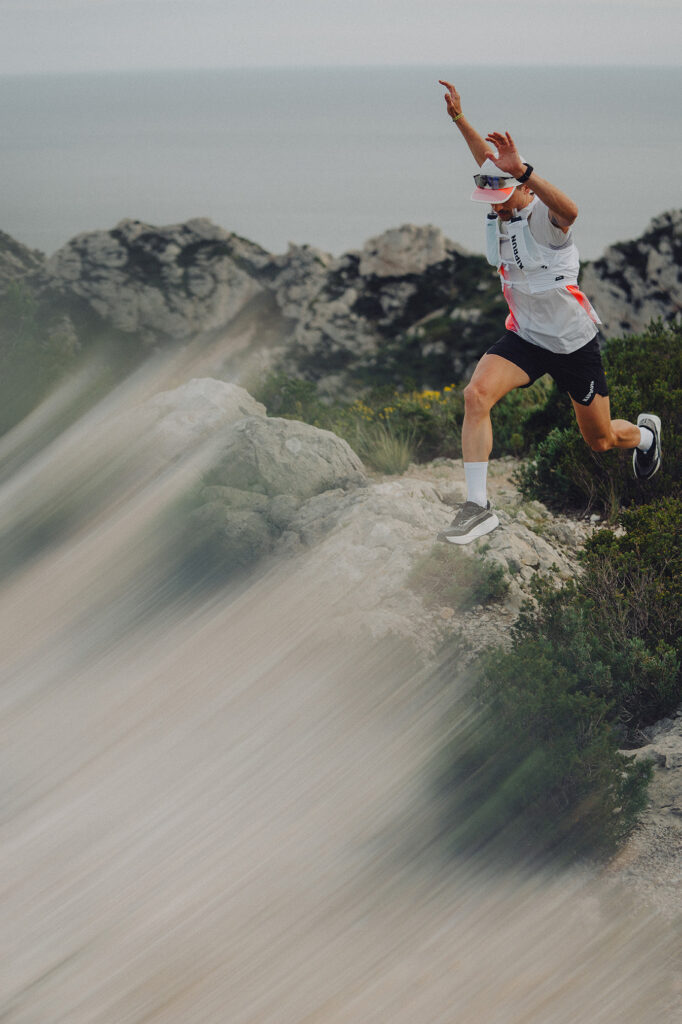
That connection to nature eventually led him to make a dramatic change in 2019, when he left his engineering job to pursue professional sport.
“I didn’t love spending so much time indoors, sitting in front of a computer,” he explains. “I felt this small voice inside me saying, ‘Maybe you should try it. Maybe sport can become your life.’ So, I listened to it.”
The then 31-year-old took a big risk in leaving his job to pursue his dream, and it was certainly not an easy road in the beginning. Blanchard spent several years living off of his savings and doing small side jobs to support himself while forging his path as an athlete. “Today I can say it was the right risk for me. If I had to do it again, I would.”
He quickly began to compile an impressive list of accomplishments. In 2020, he set the record for Quebec’s 650-kilometre GR A1 trail. In 2021, he placed third in the UTMB, and improved to second in 2022, making history alongside Kilian Jornet as the first runners to break the
20-hour mark on the full 170-kilometre course.
Those early risks have since carried him to some of the world’s toughest start lines, where he has amassed an impressive list of finishes across five continents and distances few runners would dare attempt.
But the endurance star’s most defining challenge to date began several years earlier, not on a race course, but in the Canadian winter that had slowly become part of his life.
“Winter is not just a season,” Blanchard says about Canada. “It’s part of the identity. Little by little, I started connecting with the cold.”
He began with winter bivouacs—improvised camping in snowy conditions. Then he sought longer adventures.
“One day I discovered these ultra-distance races in extreme cold, and something clicked,” he says. Inspired by American novelist Jack London’s stories about the Yukon, he decided it was the perfect place to complete his first big Arctic event.
And that is how Mathieu Blanchard entered the 600-kilometre Yukon Arctic Ultra, his most extreme adventure to date.
This punishing polar race takes place every year in February, when temperatures can drop below -40 C. The race is run in near autonomy, meaning the former engineer strapped a sled to his back carrying all the equipment he would need for the gruelling journey. That included clothing, a bivouac shelter, a sleeping mat, snowshoes, a stove, a pot, emergency food, a satellite communication device and much, much more.
In 2025, 46 people entered the race. Of those 46, only six finished. And of those six, only three completed the colossal distance on foot.
Blanchard was one of them—the first one of them. He won the foot race with a time of seven days, 22 hours, and 28 minutes.
“It was not heroic. It was just hard. Very hard,” says the 38-year-old. “The kind of experience where you learn quickly that nature doesn’t care who you are.”
It would be easy to look at Blanchard’s accomplishments and see them as something reserved for elite athletes. But perhaps the most compelling thing about him is that he believes adventure isn’t reserved for the few. He’s a reminder that people are capable of extraordinary things, and he’s working hard to encourage others to recognize that.
Take his relationship with his brother, Luca. When Luca was just 15-year-old, he was involved in a terrible road accident that resulted in the amputation of one of his legs. It was a miracle that he survived at all.
“It was extremely difficult for him,” says Blanchard. “At that age, you’re just starting to build your confidence, your identity, your place in the world. And suddenly, he had to rebuild everything.”
He explains that as Luca’s big brother, he wanted to help him on that journey. It wasn’t about giving him big speeches. It was about sharing something stronger. So, when Luca was old enough, Blanchard took him to Jordan’s Wadi Rum desert for what he describes as a “running adventure.”
The adventure? The Half Marathon des Sables, a 150-kilometre ultra race with temperatures soaring to 40 C during the day—the polar opposite of Blanchard’s future Yukon adventure.
“I wanted him to feel that he was still capable. That his dreams were still allowed,” he says. “We talked a lot during that adventure. I think something opened for him there. When he came back, he changed his life.”
Today, Luca dreams of competing at the Paralympic Games in snowboarding. He’s joined the French team and continues to train incredibly hard.
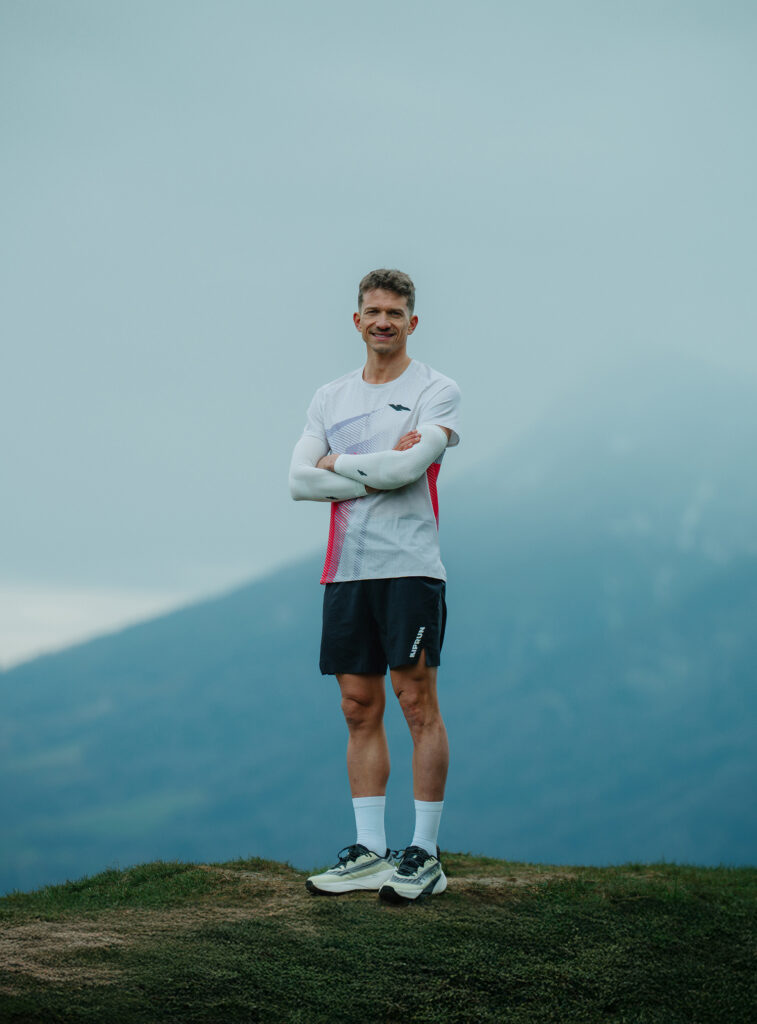
“For me, that adventure with him is one of the most meaningful things I’ve ever done.” Blanchard’s encouragement doesn’t stop with family.
He also strongly believes that everyone should follow their dreams, regardless of where they are at on their journey.
“Don’t wait until you control every part of the dream,” he says, adding that at the beginning, you never have all the pieces: the budget, the skills, the perfect confidence. But that’s okay.
“A dream, by definition, is something ambitious, emotional, and a little uncomfortable,” he says. “You have to take the first step without having all the cards in your hand. It’s never too late. But also, don’t wait forever.”
Today Blanchard shares his training philosophy through Campus, a training app supporting more than 600,000 runners. No matter the goal, whether it’s performance, looking to enjoy the process, or simply feeling better, the Frenchman takes pride in helping people progress.
“Very quickly, I understood that if adventure and outdoor sport helped me grow, maybe it could help other people too,” he says, adding that people began writing to him to share that they had taken up running, signed up for their first race, spent more time outdoors or dared to dream a little bigger. “That gave a lot of meaning to my career.”
So, what’s next for the former Montreal resident? Blanchard describes this next chapter as one of “amplification.” Through his new partnership with Kiprun, he’s exploring parts of himself that extend beyond racing to build something bigger than podium finishes.
That means bringing together all of the skills he’s developed throughout his life.
The former engineer is now involved in testing gear and co-developing products, work that allows him to tap into the analytical mindset he once used in engineering.
“Today, when I work on product development, when I test gear, when I analyze performance, I still use that engineering brain,”
he says. “It just found a new playground.”
For Blanchard, performance alone was never enough. While he still loves racing, he says the opportunity to help create products and contribute to something lasting is equally fulfilling.
“I love the idea that when I reach the end of my career, I won’t only be able to say, ‘I ran fast.’ I’ll also be able to say, ‘I helped create products with people I trusted.’ That means a lot to me.”
As for the racing side? Well, what’s next remains to be seen. But if Blanchard’s journey has proven anything, it’s that he isn’t afraid of the unknown. In fact, he welcomes it.
“When a project scares you, it’s already a sign that it matters,” he says. “The difference is maybe that I don’t see fear as an enemy. I see it as a conversation. And usually, I still move forward.”
Photography: MB Studio
You may also like: Cover Stories
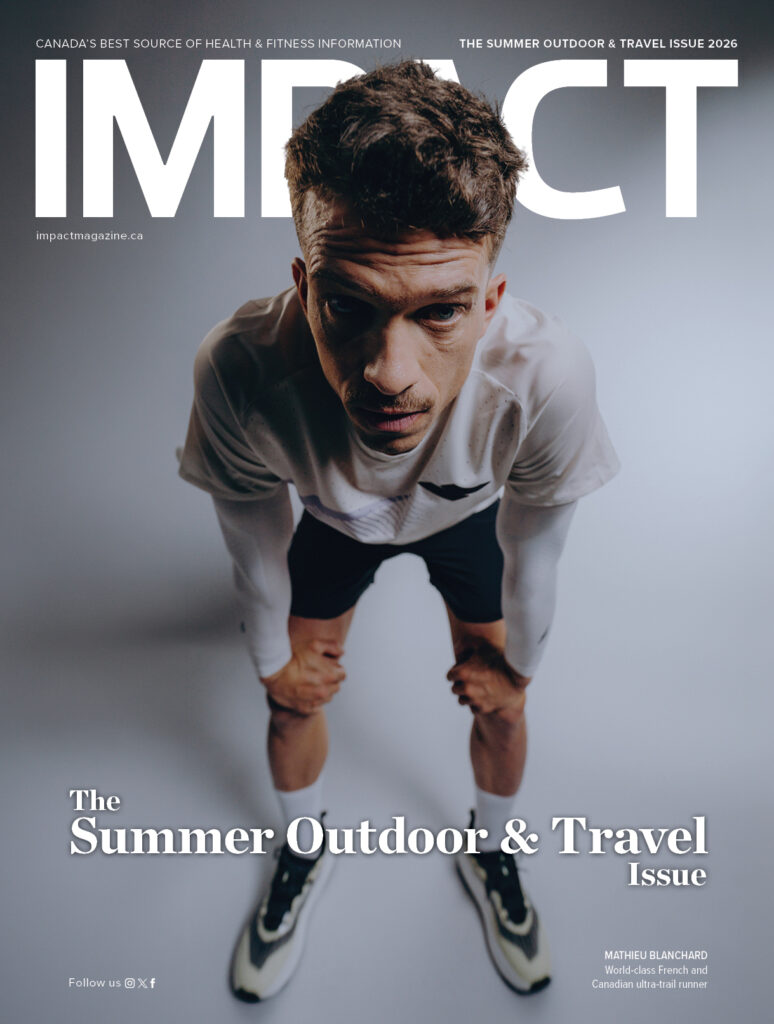
Read This Story in Our 2026 Summer & Outdoor Issue
Canada’s best source of health & fitness information — IMPACT Magazine’s 2026 Summer Outdoor Travel Issue: trail running, outdoor travel, workouts and seasonal recipes.
Featuring world-class French-Canadian ultra-trail runner Mathieu Blanchard, this digital edition takes you coast to coast through Canada’s most unforgettable bucket-list hikes, trail-running tips, and race-day strategies. Build strength and balance with targeted summer workouts, master the taper, and find your footing on technical terrain. Plus enjoy seasonal grilling and plant-forward recipes — Grilled Mexican Corn, Hoisin Portobello Burgers with Chili Lemon Broccolini, Smoky Black Bean Quinoa Burgers — and more outdoor cooking inspiration for active travelers.