

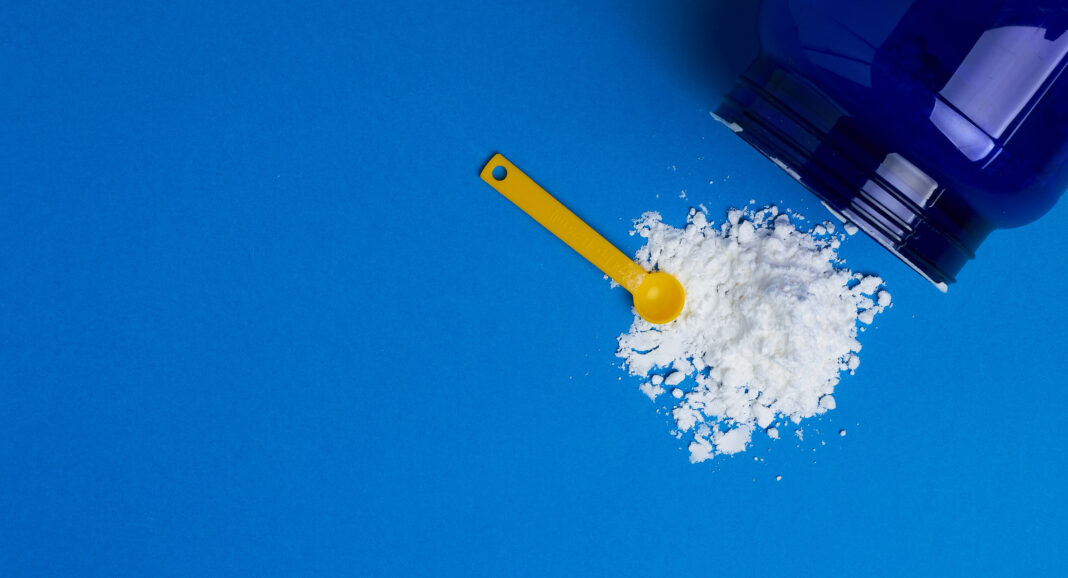
From the gym, to the track, to the yoga studio, creatine monohydrate is popping up everywhere these days. Creatine’s potential to not only support muscle growth and recovery but also cognitive performance has made it a mainstay in many of our kitchens. Creatine is a supplement that has stood the test of time with decades of studies, countless athletes, and still no serious red flags.
Creatine is a substance that helps your body regenerate ATP (adenosine triphosphate) which is the primary energy-carrying molecule used by living organisms. ATP fuels short bursts of high-intensity effort that are used for reps in the gym, and sprints. More ATP means a greater capacity to train hard and recover fast.
But for all its proven power, creatine is surrounded by rumours that refuse to die. Let’s separate fact from fiction.
Creatine Is an Anabolic Steroid
Myth
Creatine often gets lumped in with steroids simply because it builds muscle. But, chemically and biologically, they are worlds apart.
Anabolic steroids are synthetic forms of testosterone that boost muscle protein synthesis by increasing protein synthesis in the cell. In contrast, creatine is a compound your body naturally makes from amino acids (glycine, arginine, and methionine) in your liver and kidneys.
Once stored in muscle as phosphocreatine (PCr), it is used to regenerate ATP, your muscles’ quick-fire energy source. The result? You can train harder and longer, stimulating more growth over time.
Creatine Damages Your Kidneys
Myth
This myth dates back decades and stems from confusion over creatine metabolism and its by-products. Creatine and phosphocreatine break down into creatinine, which enters the blood and is eliminated in urine. Because creatinine levels are used to assess kidney function, early concerns arose that creatine supplements might raise creatinine and strain the kidneys. However, research shows no such link. Most studies find that creatine supplementation does not cause harmful increases in creatinine.
In addition, creatine supplementation is not associated with kidney damage. Dozens of long-term studies confirm no kidney dysfunction in healthy adults taking 3–5 grams/day. In fact, elite athletes have used creatine safely for over 30 years.
Creatine Can Help Protect the Brain
Fact
Creatine’s benefits go beyond muscle. The brain uses enormous amounts of ATP, and research suggests that creatine supplementation can protect against energy deficits after injury.
In studies, creatine use in children with traumatic brain injury show improved cognitive, physical, and behavioral outcomes. Preliminary data even suggest creatine may reduce concussion severity when taken soon after injury.
While more research is needed, particularly in mild head injuries, creatine could soon become a valuable tool in concussion recovery, especially under medical supervision.
Women Respond Differently
Fact
Creatine is not just a guy thing. Female athletes benefit too, though the physiology differs slightly.
Women may have higher baseline intramuscular creatine levels perhaps due to smaller muscle mass. As such, creatine supplementation may not always have the same level of impact on performance as it does in males. Even so, changing hormonal factors during reproductive stages like menses, pregnancy, peri- and post-menopause seem to result in potential gender-specific uses for creatine. For example, women often have lower brain creatine levels and are twice as likely to suffer from depression during their reproductive years. Creatine supplementation around 10 grams/day has been linked to improved mood and energy metabolism. After menopause, creatine becomes even more valuable, helping preserve muscle and bone strength.
And, despite gender differences in response to creatine for performance, there are positive effects. Research in females shows that creatine supplementation does indeed support strength, recovery, and lean mass gains, especially during resistance training.
Don’t Mix Creatine with Coffee
Myth (or Fact?)
The caffeine-and-creatine combo sparks debate: does caffeine cancel creatine’s benefits, or do they enhance each other? Research is mixed. Concerns arise because caffeine and creatine have opposite effects on muscle relaxation, and the combination can worsen sleep or cause gastrointestinal (GI) discomfort. Still, recent studies suggest these drawbacks don’t significantly affect overall performance and using both after the creatine loading phase may even boost results more than if taken alone.
A 2017 study by Trexler et al. tested 300 milligrams caffeine and 20 grams creatine on sprint and strength performance in active men. The combination did not reduce performance, though seven per cent of participants reported digestive issues. Furthermore, a 1998 study found no evidence that caffeine and creatine interfere with each other’s metabolism.
You Can Skip the Loading Phase
Fact
The classic “loading phase” of 20 grams/day for a week helps saturate muscles fast, but it’s not mandatory.
Research shows taking a steady three – five grams per day achieves the same creatine saturation over about four weeks. The slower approach reduces the risk of bloating and digestive discomfort that sometimes occur during rapid loading.
If you do load, divide doses into ≤10 g servings throughout the day and take them with carbohydrates to aid uptake. Most athletes choose to split the 20-gram loading dose into four and include five grams at creatine with meals and one snack. Regardless of whether you start with a loading dosage period or not, consistency is key, not speed.
Bottom Line
Creatine is one of the most thoroughly researched and safest supplements available. It is not a steroid, will not damage healthy kidneys, and may even protect the brain. For both men and women, across ages and training goals, creatine delivers measurable improvements in strength, recovery, and cognition.
Your Game Plan:
● Maintenance: 3–5 grams/day (or 0.1 g/kg of body weight/day) after training, ideally with carbs.
● Optional loading: 20 grams/day (split into 4–5 doses) for 5–7 days.
Whether you chase it with juice or water, creatine might be the simplest, smartest performance upgrade you can make.
You may also like: Food for the Brain, Food for the Body

Read This Story in Our 2025 Fall Fitness Issue
IMPACT Magazine’s Fall Fitness Issue 2025 featuring the The Fitness Guy, Pete Estabrooks, telling all with his shockingly candid new memoir revealing a story you never expected, as well as former pro soccer player Simon Keith and Paralympian Erica Scarff. Find your ultimate guide to cross-training for runners, no jump cardio and superset workouts along with the best trail running shoes in our 2025 Trail Running Shoe Review, and so much more!