
In the relentless -40C, Kevin Crowe heaves one booted foot in front of the other across Yukon’s snow-packed boreal forest biome. Behind him, he pulls a sleigh of 70 pounds packed with gear for his 12-day journey, including a sleeping bag and foam rest, down parka, pots and pans, and food for three days, enough to last until the next fill-up station.
Six days in, his appendages and eyelashes are frozen, his clothes are wet and won’t dry, his back aches. His level of exhaustion is nearing the danger zone. Even his Garmin has stopped working due to the extreme subarctic conditions.
There are moments of beauty that permeate the desolation and discomfort, like the aurora borealis glimmering overhead in their ghostly beauty. But after 366 kilometres on the course, Crowe can’t deny the reality: the relentless cold is putting his safety at serious risk.
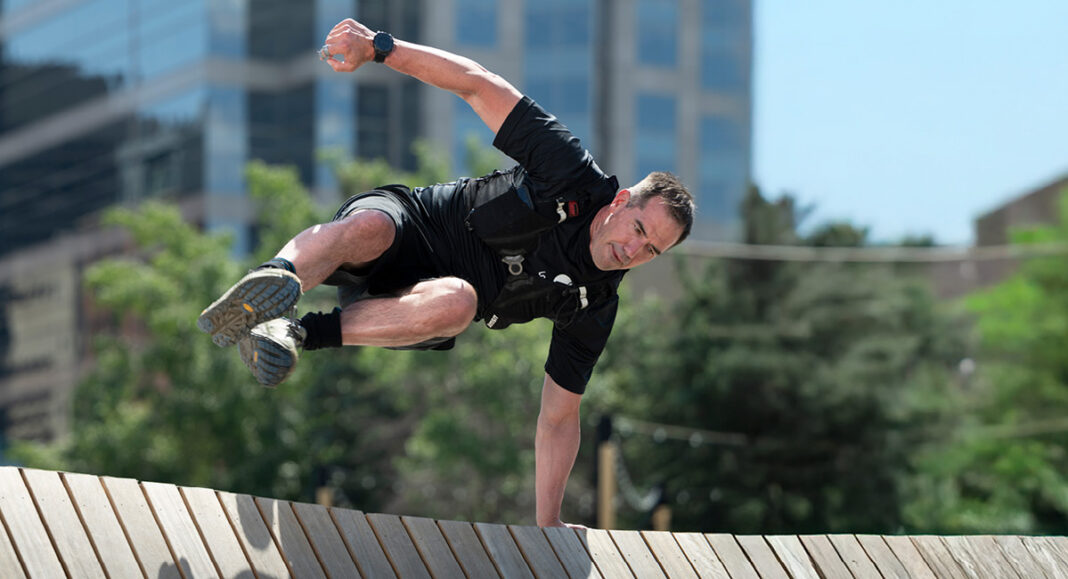
The 54-year-old Calgarian and tech-company executive was one of 46 racers in the 2025 Montane Yukon Arctic Ultra, held February 2 to 14. Participants of this race, billed as the world’s coldest ultramarathon, battle across 640 kilometres of undulating landscape through snow, ice and cold. They follow an old sled-dog route that joins the communities of Teslin and Faro. The wilderness is remote—the conditions brutal.
“I could feel that things were starting to come undone,” Crowe remembers. “I could barely stand upright… I had to think about my safety. How far am I going to push this? When is enough, enough?”
He concluded it was time to exit the race and return to his family.
Leaving a race early is tough for an endurance athlete like Crowe because they devote their lives to setting and reaching goals and challenging themselves physically and mentally.
“There is something really powerful about doing things that you think you can’t do and building that muscle around self-belief—of overcoming doubt, of overcoming obstacles, of calling on your tenacity and your courage,”
he explains. “They’re all muscles; you need to build them… When you [do], your life will be so much more fulfilled.”
There is something really powerful about doing things that you think you can’t do and building that muscle around self-belief.
After leaving the race, Crowe learned that more than 30 people exited before he did. A few had been rescued by helicopters;
some were recovering in hospital from frostbite. Only three runners finished the Yukon Ultra this year.
Crowe was disappointed in not finishing, but not just because he fell short of his goal. He wanted to fulfill a promise to the friend who’d inspired him to run in the first place.
In 2010, Crowe’s good friend, Ryan Westerman, was just 37 years old when he succumbed to brain cancer. It was in his memory that Crowe founded Give a Mile, a non-profit that helps people fly to visit loved ones who are terminally ill so they can say goodbye. With charity status and operations in both Canada and the United States, Give a Mile has, since its founding in 2013, flown more than 1,300 family members to or from 151 countries using 61,275,771 miles.
Crowe hoped to raise another 37 flights—Westerman’s age at his passing—by becoming the first person to complete two monumental challenges in the Yukon in one year: stand-up paddleboarding 715 kilometres on the Yukon River Quest and finishing the Yukon Ultra.
In June 2024, he completed the Yukon River Quest challenge, voyaging from Whitehorse to Dawson City in the world’s longest annual paddling race. He not only completed the race; he earned a bronze medal and his first podium finish as an endurance athlete.
The Yukon Ultra, however, is the one that got away.
It was to cope with the grief of Westerman’s illness that Crowe started running to begin with. Watching his friend at the end of life, Crowe was motivated to do things he’d dreamed of but hadn’t done—like running a marathon.
Watching Westerman, Crowe concluded, “You want to be deliberate about the time you use. There’s only so much of it, so be very awake to how you’re using that time… Decide, ‘These are the things I want to do. I’m doing them because they are important to me.’”
A month after Westerman passed in 2010, Crowe completed his first marathon and has piled on the mileage ever since. He is committed to not putting off goals, even when facing his own challenges, like a serious health issue that resulted in hospitalization in 2022.
Six weeks after Crowe left the frigid Yukon Ultra, he travelled to another extreme temperature zone and completed the Arizona Monster 300, a 304-mile journey through southern Arizona’s Sonoran Desert, a rugged and challenging route through backcountry terrain and high elevation mountains.
He felt he owed it to his supporters who helped him raise the 37 flights in Westerman’s name to complete an ultra.
“It was incredible to get to the finish line, to overcome that self-doubt [after the Yukon Ultra]. It felt like I was on top of the world,” he says.
“If you’re right now sitting on a couch reading this, and you think you can’t even run a 5K, you can. Believe in yourself. Put the work in, and you will do it. You’re going to feel amazing at the end.”
Photography: Graham McKerrell
You may also like: Athletes with IMPACT
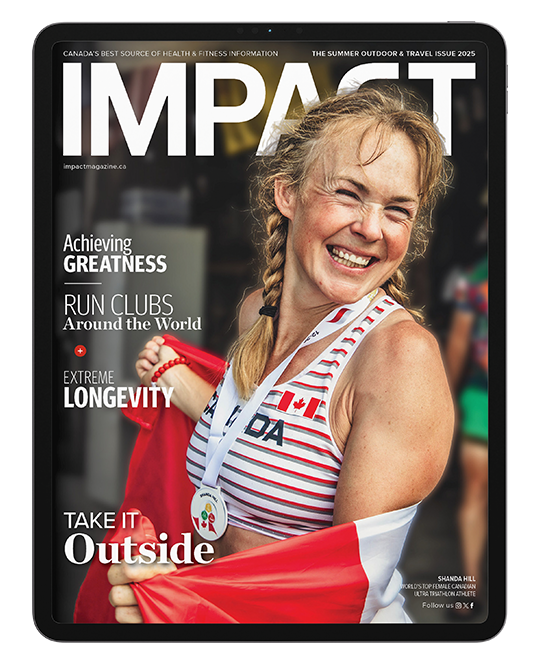
Read This Story in Our 2025 Summer Outdoor Travel Issue
IMPACT Magazine Summer Outdoor Travel Issue 2025 featuring Shanda Hill, a Canadian Ultra Triathlete who is redefining the sport. Run on some epic trails in our own backyard or join a run club. Eat your way for Mental Clarity, fueling while travelling, seasonal eating and some kitchen must haves. Become strong and fit in only 20 minutes a day, and enjoy some tasty drinks guilt free and so much more.