
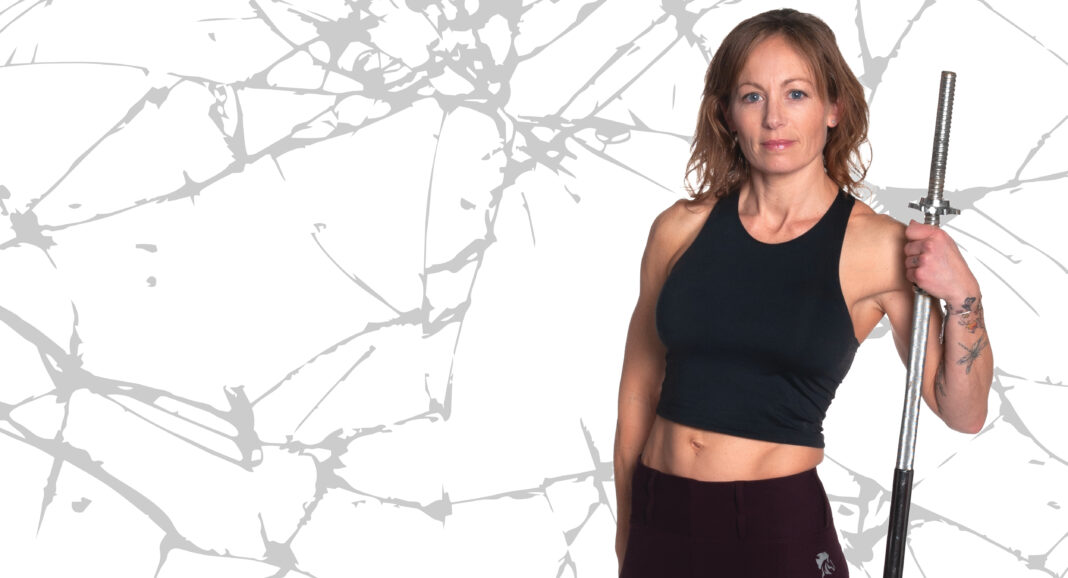
In November 2022, Amy Mawson was badly rear-ended, resulting in severe whiplash, a lower back injury, and a vestibular concussion. She experienced nausea, dizziness, headaches, shallow breathing, and diminished cognitive function.
Before the accident, Mawson was adept at multi-tasking, but now too much stimulation overwhelms her brain. “I’ll be in the store looking at my grocery list, trying to talk to the cashier with music playing overhead, and then I’ll reach capacity and start to cry. That’s weird and awkward,” she says. “I miss my old brain.”
Due to her structured routine of vision therapy, fitness training, and equine-assisted wellness, the 47-year-old from Red Deer, Alberta, says today she’s in the “best physical fitness of her life,”all the while managing the ongoing traumatic brain injury (TBI).
At the gym, she works on restoring her equilibrium, balance, coordination, depth perception, and proprioception by using the Bosu ball, exercise ball, bands, squats, lunges, and crossbody exercises to activate both sides of her brain. Visualization—mentally walking through an activity—also invites her brain to engage the right systems before movement begins.
“My cognitive functions lowered after my accident, but what I came to learn was that movement/fitness/exercise creates capacity in our brain.”
I asked myself what I can do.
I can teach people; I can help people.
This was Mawson’s third serious car accident. She was in a head-on collision at 18 years old, and at age 22 was rear-ended on her way to a horse show—Mawson was a professional rider and trainer.
Unable to take time off work to rehab after her second accident, she self-remedied, intuitively programming her gym workouts based on what her body was telling her that day. “If I rode six horses and they were all drifting in one direction, I’d focus on correcting my imbalances.”
Eager for more fitness knowledge, Mawson completed her canfitpro Personal Trainer Specialist certification in Toronto in 2002. She then worked as a fitness trainer at GoodLife Fitness and World Health gym.
Over the years, Mawson worked in various roles for Olympic and elite equestrians. These programs caught the attention of an international show-jumping stable just outside of Calgary, spurring her move to Alberta in 2003. A 2004 feature in Oxygen Magazine highlighted Mawson’s recovery after her two car accidents and how her commitment to her gym workouts helped rebuild both her physical strength and emotional confidence.
Then after leaving an abusive marriage in 2017, Mawson started her business—To The Core—a year later.
To The Core offers programs that combine faith-based coaching, equine-assisted experiences, and functional wellness to restore balance in body, mind, and spirit. Some of her clients are athletes, seniors, and individuals who manage addictions, PTSD, and autism. When training her high-performance riders she reminds them to check in with themselves at the beginning of each session, be present, and self-regulate. “It’s incredible how much of our energy and emotions influence the horses.”
Mawson began designing equestrian-specific fitness programs after seeing the direct correlation between a rider’s imbalances and the horse’s compensating performance. Taking riders off the horse and into the gym, she’d point out that pushing harder through one foot in a squat, for example, translated to pushing harder on one side of the stirrup than the other.
Or, noticing that riders are struggling with their turns due to bracing through their ribcage and stabilizing with their hands, Mawson has riders sit on a stability ball using a resistance band to simulate the holding of the reins. The objective is to keep the torso centred with the hands soft and independent.
In April last year, Mawson was invited to speak at the 2025 Brain Health Summit in Victoria. The conference was hosted by Brain Changes Initiative, a non-profit group dedicated to providing advocacy, support, and education for TBI survivors. It was founded by brain injury survivor Dr. Matthew Galati. His rehab and research show that whether it’s a healthy brain, an injured brain, or a mild developmental disability, aerobic activity increases the flow of blood and oxygen to the brain, creates new brain cells, and raises levels of neurohormones,
all enhancing cognition, mood, and overall well-being.
Nature is the best medicine for Mawson, and she feels blessed to live a life around horses. “For a while I didn’t feel like I had a purpose. I felt like I lost everything. But I can’t be here without a purpose,” she says. “I asked myself what I can do. I can teach people; I can help people.”
Mawson believes her life’s mission is to help realign potential and elevate others. And, of course,
“time spent with horses offers a sacred reset.”
Photography: Jana Miko
You may also like: Paddling Against Diversity
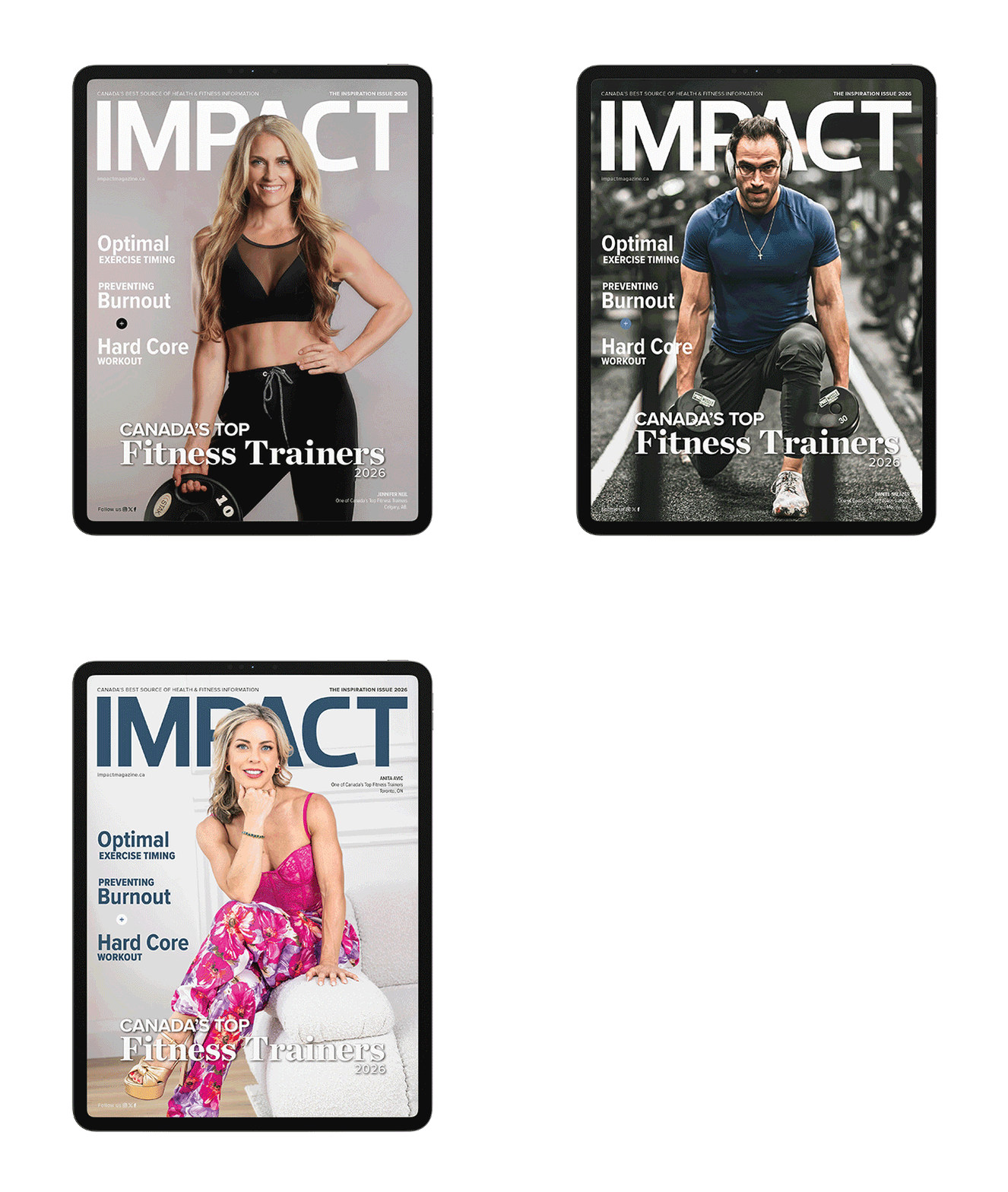
Read This Story in Our 2026 Inspiration Issue
IMPACT Magazine Inspiration Issue 2026
Meet 36 outstanding recipients of Canada’s Top Fitness Trainers, Class of 2026 in this highly anticipated issue!
Plus, when is the optimal time to workout, Mobilize your Training, AI Tools for Better Health, Strong Boned for Life, Prevent Burnout, The Anywhere Dumbbell Workout, Hard-Core Explore workout. Some amazing recipes, Easy Mixed Vegetable Samosas, Sambal Goreng, Citrus Cake and more!
This just scratches the surface of what you’ll find in this issue, so dive into the DIGITAL EDITION and be empowered for a fantastic 2026!