

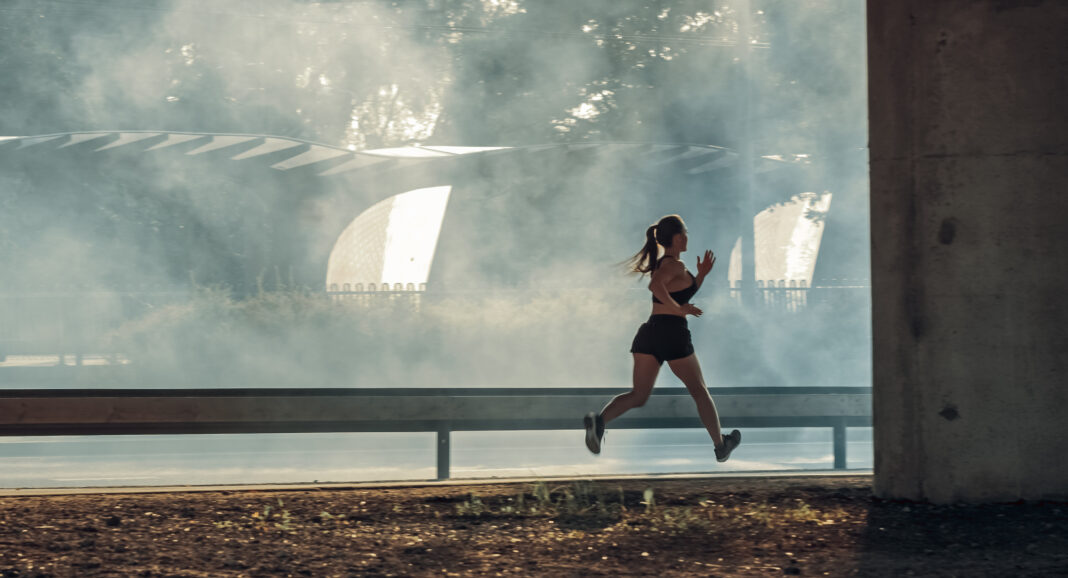
When that WeatherCan air quality alert flashes the number seven, a heavy feeling in my stomach takes hold. It clearly doesn’t understand that for some of us, being outdoors is integral to well-being. So, what should we do?
Canadians are generally lucky to have good air quality, with most living in areas where pollutants remain below national standards.
We know that air pollution is bad for our health because when we inhale the mixture of gases and particles, it can affect our lungs, heart, brain, and many other systems in our body. In fact, air pollution is one of the leading causes of death globally. But given that most of us don’t have the luxury of moving our home just because of air quality, thinking about what we can do to manage our risk is important.
Exercise is an important tool in any health management strategy. By exercising, we are reducing our baseline risk of disease, which in turn could reduce pollution-related health impacts.
So, what happens to our bodies when we exercise outdoors when there is an air quality advisory?
Breathing more heavily increases our dose of air pollution and impairs some of our nasal defences, potentially making exercisers more susceptible to pollution’s effects. Despite this, research generally suggests the benefits of exercise outweigh the risks—even in more polluted areas.
In Canada, the personal dilemmas we face more often surround times when wildfire smoke blankets where we live and we feel trapped indoors. And that dilemma is only growing. As climate change accelerates, wildfires are becoming more frequent and more intense, reversing decades of progress on air quality. So, when the sky turns orange and the smoke rolls in, what should we do?
Early findings on wildfire smoke exposure during exercise are mixed: Mount Royal University scientists report effects on small blood vessels, while pilot work by undergraduate Sacha Schimmelpenninck from the UBC Environmental Physiology Lab found no impact on vascular or lung function. Importantly, smoke levels in these studies were far below the concentrations at which most people change workout plans, leaving major questions unanswered about how exercise interacts with the higher smoke levels Canadians increasingly face.
Despite this, a good place to start is the Air Quality Health Index (AQHI) or setting up the WeatherCan app to send you alerts
about what to do when the air quality is poor. Exercising indoors is often the best first option—if the space is properly filtered. Closed windows and HEPA filtration matter; otherwise, indoor air may not differ much from outside conditions.
For some of us, being outside is integral to our well-being, and the thought of 10 kilometres on a treadmill seems about as enticing as a popsicle in Edmonton in February. So, if you need to get outside to move, should you go for a walk instead of that run?
Unfortunately, we don’t have a simple answer. Research in healthy people doesn’t suggest that exercising harder in air pollution is any worse for you than exercising moderately or resting. But there’s a catch: many studies have limitations. For example, some rely on diesel exhaust as a model of air pollution. That leaves a major unanswered question—whether those findings apply to the very different chemical mix found in wildfire smoke, which is becoming a more common exposure across North America.
Based on the research we have, if your run means that you are out for a shorter period, even if it’s more intense, you might be better off than going for a longer walk, as your overall air pollution exposure could be lower. Bear in mind that there isn’t lots of data on people who exercise for more than about 90 minutes, so we don’t always have comprehensive data to answer these questions fully.
In instances where you decide that it’s more beneficial for you to move outside, let your symptoms guide you, and if you have any symptoms related to air pollution, such as chest tightness, wheezing or shortness of breath, these are not to be ignored.
Like the person who meditates for five minutes in the morning, but is distracted and stressed throughout the day, there are many other hours in the day that we can do something about our exposure to air pollution. Having a portable air cleaner with a HEPA filter at home is a great way to reduce your exposure to harmful particles from wildfire smoke.
If commercial air cleaners are out of financial reach and you’re looking for a cheaper but effective option, DIY air cleaners are a great alternative.
You can also consider wearing an N95 mask during exercise. If you are someone with any kind of lung disease, including asthma, chat to your doctor first. Although it may decrease your overall exercise capabilities, it is one way to reduce your exposure to particles from wildfire smoke.
So back to that WeatherCan alert on my phone; would I go for that run? Like all good decisions, it depends. The smell of smoke makes me nauseous, so if it smells too smoky out, I’ll probably skip the run. But what should you do? My advice: weigh the AQHI messages with any mitigation strategies you can employ, along with the circumstances of your life and well-being.
You may also like: Tips To Detoxify Your Home

Read This Story in Our 2026 Summer & Outdoor Issue
Canada’s best source of health & fitness information — IMPACT Magazine’s 2026 Summer Outdoor Travel Issue: trail running, outdoor travel, workouts and seasonal recipes.
Featuring world-class French-Canadian ultra-trail runner Mathieu Blanchard, this digital edition takes you coast to coast through Canada’s most unforgettable bucket-list hikes, trail-running tips, and race-day strategies. Build strength and balance with targeted summer workouts, master the taper, and find your footing on technical terrain. Plus enjoy seasonal grilling and plant-forward recipes — Grilled Mexican Corn, Hoisin Portobello Burgers with Chili Lemon Broccolini, Smoky Black Bean Quinoa Burgers — and more outdoor cooking inspiration for active travelers.